
What surfaces are best suited for commercial jet washing?
Commercial jet washing is best suited to durable, water-resistant surfaces such as concrete, block paving, tarmac, stone, brickwork, metal cladding and many hard-wearing façades. Pressure and temperature must be adjusted to the material and its condition, as delicate surfaces, damaged coatings and some roof systems may require soft washing or steam cleaning instead.
Commercial jet washing is best suited to robust, water-resistant surfaces that can tolerate controlled pressure, such as concrete, block paving, tarmac, natural stone, brickwork, metal cladding and some hard-wearing rendered façades. The cleaning pressure, water temperature, nozzle type and detergent must be selected for the specific material and its condition. Worn coatings, open joints, damaged masonry and delicate surfaces may require lower-pressure washing, steam cleaning or soft washing instead.
Concrete and block paving
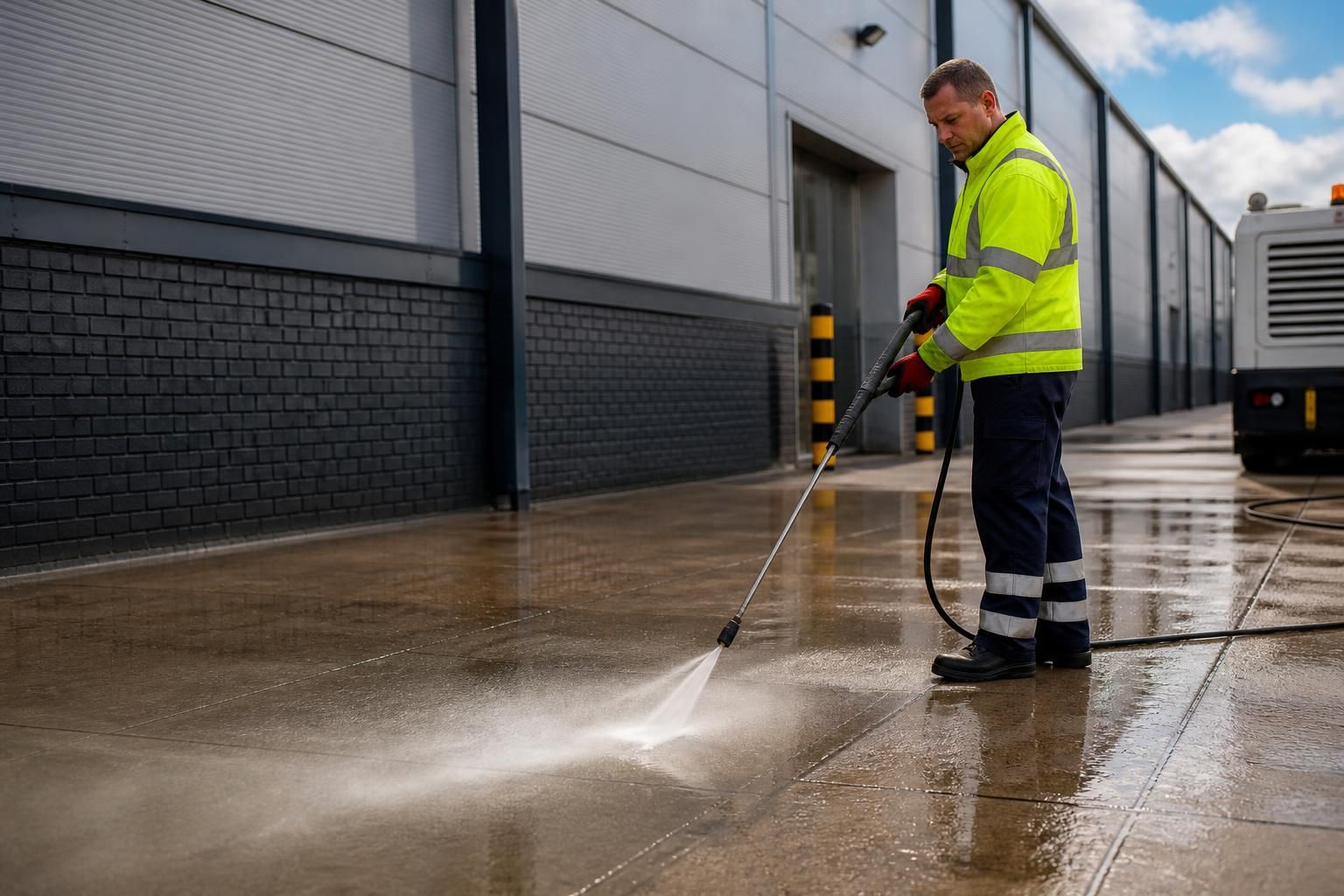
Concrete is one of the most suitable surfaces for commercial jet washing. It is commonly used for pavements, service yards, loading areas, forecourts, pedestrian routes and car parks, where it can accumulate soil, algae, oil residues, tyre marks and general traffic grime. Controlled jet washing can remove surface contamination and improve the appearance and slip resistance of the area.
Block paving can also respond well to pressure cleaning, provided the blocks, joints and surrounding features are assessed first. Excessive pressure can displace jointing material, damage older blocks or expose loose edges. Where necessary, joints can be re-filled after cleaning to help maintain the stability and appearance of the paved area.
Tarmac and asphalt
Tarmac is generally suitable for carefully controlled commercial cleaning, particularly on car parks, access roads, estate roads and pedestrian areas. It is more vulnerable than concrete to damage from excessive pressure, concentrated spray patterns and heat, especially where the surface is aged, soft, cracked or already breaking down.
Cleaning should therefore use an appropriate pressure and a suitable distance from the surface. Oil and fuel contamination may need a compatible treatment before rinsing, while heavily damaged areas may require repair rather than intensive washing. Drainage must also be considered so that contaminated runoff is managed correctly.
Natural stone and concrete paving slabs
Many types of natural stone and manufactured paving are suitable for jet washing when their composition and condition are known. Dense stone may tolerate controlled pressure, whereas softer or more porous materials can suffer from surface erosion, etching, pitting or the loss of existing sealants.
Particular care is required with sandstone, limestone and weathered stone. A lower-pressure method, steam cleaning or a specialist detergent may produce a safer result than using maximum pressure. A discreet test area helps establish how the stone will respond before work begins across a large commercial site.
Brickwork and masonry
Sound, well-maintained brickwork can often be cleaned with low- to medium-pressure washing, especially where the objective is to remove algae, dust, light atmospheric soiling or surface deposits. Jet washing is not automatically suitable for every brick façade, however. Older bricks, friable mortar, decorative detailing and previously damaged surfaces can be affected by aggressive cleaning.
Water pressure should be kept within the tolerance of the brick and mortar. Pointing that is loose or missing may need attention before cleaning, as forcing water into open joints can increase moisture penetration. Where staining is embedded or the masonry is particularly delicate, steam cleaning or a more controlled chemical treatment may be preferable.
Metal cladding and hard-wearing façades
Metal cladding, coated panels and some commercial façade systems can be cleaned effectively with low-pressure jet washing and appropriate detergents. This is useful for removing dust, bird fouling, algae and general atmospheric deposits from industrial units, retail premises, warehouses and office buildings.
The coating, joints, seals and fixings must be checked before cleaning. Strong pressure can drive water behind panels or damage failing paint and protective finishes. Detergents should be compatible with the coating and rinsed away thoroughly to prevent streaking or residue. Access equipment may be needed where façades cannot be cleaned safely from ground level.
Roofs and roof-mounted surfaces
Some robust commercial roof surfaces, including certain metal systems and sound concrete areas, may be suitable for controlled pressure cleaning. Roof cleaning requires additional assessment because water can enter laps, joints, penetrations and damaged areas. The condition of the roof covering, insulation, drainage and access routes should be considered before work starts.
Jet washing is often unsuitable for fragile roof tiles, aged coatings, asbestos-containing materials, loose membranes and surfaces with existing defects. A lower-pressure process, steam cleaning or a specialist roof treatment may provide better protection. Roof work must also be planned around safe access and fall prevention.
Car parks, service yards and loading areas
Commercial jet washing is particularly useful on large hardstanding areas where dirt, algae, chewing gum, tyre marks, oil staining and organic matter affect appearance or safe use. Concrete and suitable paving are usually the most straightforward surfaces, while tarmac requires more conservative settings.
Before cleaning, the area should be inspected for cracks, loose surfacing, damaged drainage covers and trip hazards. Vehicles, stock and vulnerable equipment should be moved or protected. Runoff containing oil, detergent or other pollutants must not be allowed to enter surface-water drains without suitable controls.
Surfaces that need extra care
Jet washing is not a universal treatment. Extra caution is needed with:
- Soft or porous natural stone, including weathered sandstone and limestone.
- Old or damaged brickwork with weak mortar or friable surfaces.
- Painted, powder-coated or otherwise finished surfaces where the coating is lifting.
- Timber, composite boards and other materials that can absorb water or splinter.
- Rubber, plastic and lightweight façade components that may deform or mark.
- Roof membranes, fragile tiles and surfaces containing hazardous materials.
- Surfaces with open joints, cracks, failed sealants or existing water ingress.
These materials may still be cleanable, but a different method is often more appropriate. Soft washing uses lower pressure with a suitable cleaning solution, while steam cleaning can remove certain deposits with reduced mechanical force. Manual cleaning may be the safest option for small, delicate or highly detailed areas.
How the correct method is selected
A professional assessment should consider the material, age, surface finish, previous repairs, level and type of contamination, nearby drainage and the required access method. Cleaning a relatively sound concrete yard is different from cleaning an aged brick façade or coated cladding system, even when the visible dirt appears similar.
A suitable process normally includes a visual inspection, identification of sensitive areas, protection of doors and vents, a controlled test clean and adjustment of equipment settings. The operator should also confirm how wastewater will be contained or directed, particularly on sites where oil, chemicals, biological growth or construction residues are present.
In practical terms, the best candidates for commercial jet washing are sound external surfaces that are hard-wearing, stable and able to tolerate managed water pressure. The safest and most effective result comes from matching the cleaning method to the surface rather than applying the same pressure across an entire site.
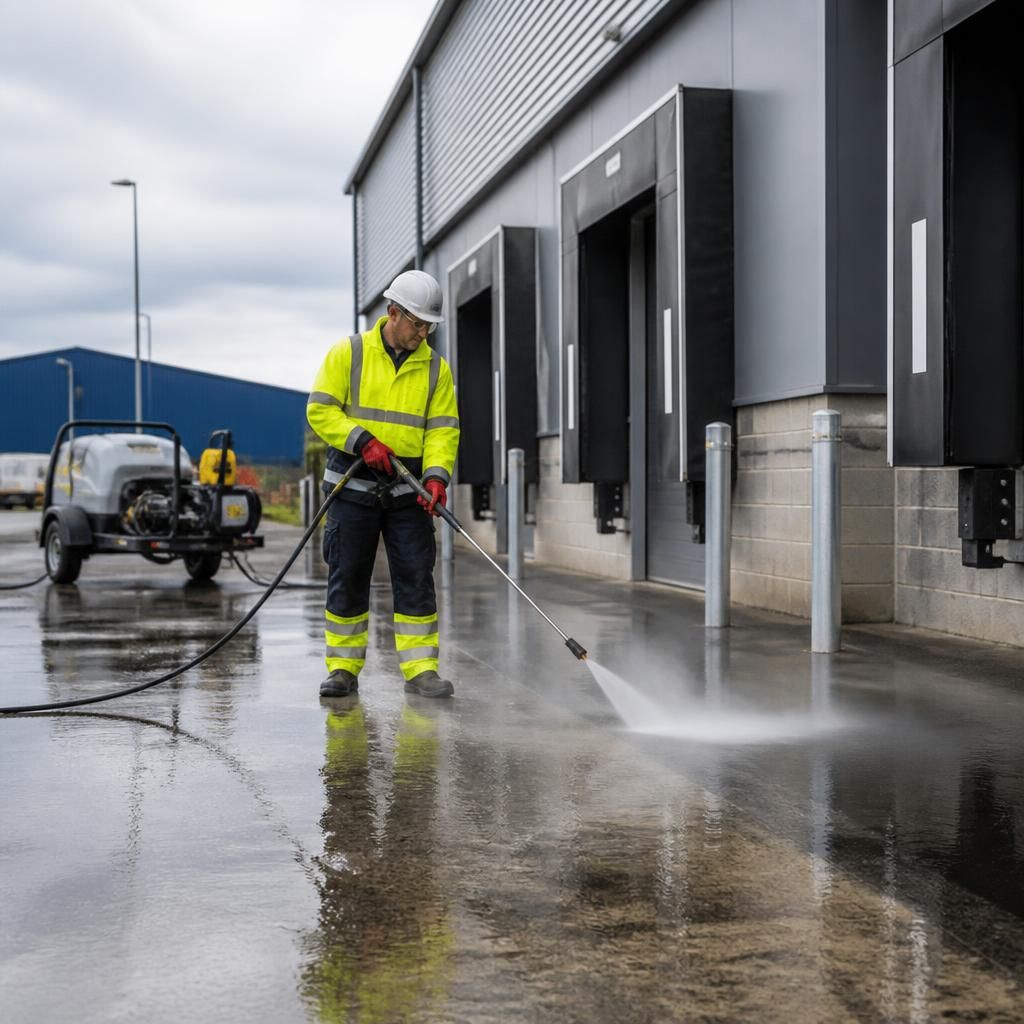
The surfaces best suited to commercial jet washing are sound, hard-wearing areas such as concrete yards, block paving, car parks, service areas and durable façades. These materials can usually tolerate controlled water pressure, provided the settings, nozzle and cleaning solution are matched to their condition.
Surface condition is as important as the material itself. Cracks, loose joints, failing coatings, friable mortar and damaged tarmac may require reduced pressure, steam cleaning or soft washing instead. A small test area allows the cleaning method to be checked before work begins across the wider site, helping to protect the surface while achieving a consistent result.