
What safety measures are in place during commercial jet washing services?
Commercial jet washing services are managed through site-specific risk assessments, trained operatives, suitable personal protective equipment (PPE) and controlled work areas. We also use appropriate equipment settings, secure access arrangements, warning signage and measures to control water, debris, traffic and public access throughout the work.
Commercial jet washing is carried out under a site-specific risk assessment and method statement, with controls for people, equipment, surfaces, water, traffic and the surrounding environment. Trained operatives use suitable personal protective equipment (PPE), inspect the work area and machinery, establish a secure exclusion zone, and select pressure, temperature and cleaning methods appropriate to the surface and contamination.
Before work starts, the team reviews the site and identifies hazards such as pedestrians, vehicles, vulnerable surfaces, overhead obstructions, electrical equipment, drainage points, uneven ground, restricted access and areas where water could enter a building. The planned controls are agreed with the responsible person on site, particularly where work takes place at a busy commercial premises, construction site, car park or public-facing location.
- Risk assessments and method statements: These set out the sequence of work, equipment requirements, access arrangements, controls and emergency procedures. They are adapted if site conditions change.
- Competent operatives: Personnel are trained to use pressure washing, steam cleaning and access equipment safely. They understand how pressure, heat, cleaning chemicals and surface conditions affect the work.
- Pre-use equipment checks: Hoses, trigger guns, lances, couplings, electrical leads, fuel systems and safety devices are checked before use. Damaged or unsuitable equipment is removed from service.
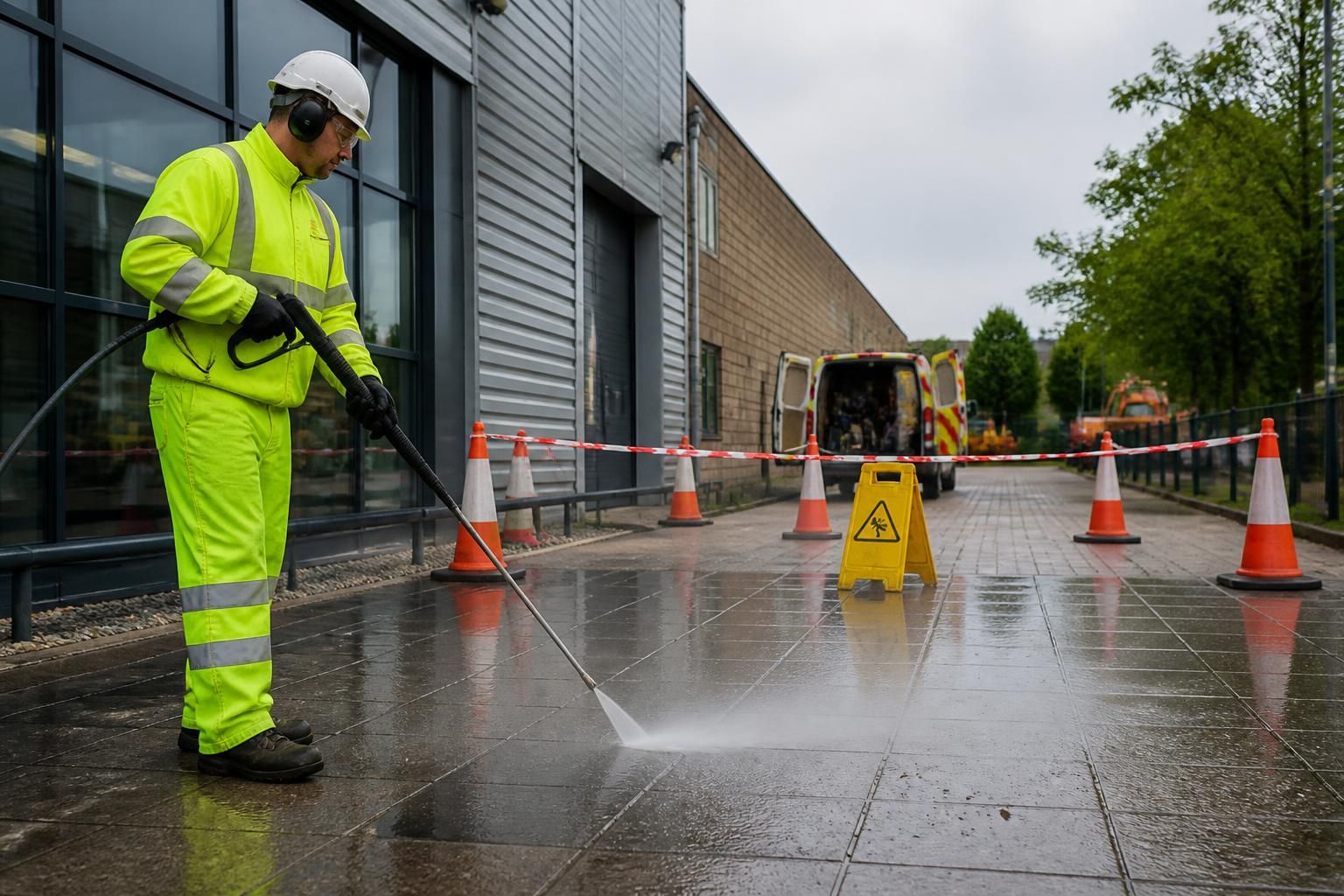
- Appropriate PPE: Depending on the task, this can include waterproof protective clothing, gloves, safety boots with suitable grip, eye or face protection, hearing protection and respiratory protection where the assessment identifies a relevant risk.
- Controlled water pressure and temperature: Operators begin with the least aggressive effective setting and adjust it according to the material. This reduces the risk of etching, joint damage, paint loss, water penetration and flying debris.
Work areas are separated from people who are not involved in the cleaning. Cones, barriers, warning signs and, where necessary, banksmen or additional site controls help prevent members of the public, staff and other contractors from entering the spray and splash zone. Access points may be temporarily managed, and cleaning is coordinated with the client where vehicle or pedestrian movements could create a hazard.
Slip risks are controlled by directing water away from walkways where possible, removing pooled water promptly and using suitable signage while surfaces remain wet. Operatives also take account of spray drift, falling debris and contaminated run-off. Windows, doors, air intakes, vents and sensitive equipment can be protected or isolated before cleaning to prevent water or dirt entering the premises.
Where detergents, biocides or other cleaning products are needed, the product information and COSHH assessment are reviewed before use. Chemicals are stored, diluted and applied according to the manufacturer’s instructions. Operatives use the required PPE and prevent untreated chemical or contaminated water from reaching drains, planting, watercourses or neighbouring property.
Access equipment and work-at-height controls are used where façades, roofs, cladding or other elevated areas cannot be cleaned safely from ground level. The chosen access method is based on the height, reach, ground conditions, obstructions and duration of the task. Equipment is positioned on stable ground, kept clear of hazards and used by trained personnel. Where there is a risk of falling, suitable edge protection, restraint or other fall-prevention measures are considered in the assessment.
Electrical and mechanical hazards are also assessed. Electrical equipment is kept away from standing water wherever practicable, and leads and connections are routed to reduce trip and damage risks. Fuel-powered machinery is operated with appropriate ventilation and controls for exhaust fumes. Hoses and cables are positioned to minimise trip hazards and are not left across an uncontrolled access route.
Weather and site conditions can affect whether jet washing is safe to carry out. High winds may increase spray drift or make access equipment unsafe, while freezing conditions can create dangerous ice. Poor visibility, heavy rain, unstable ground or excessive heat can also require the work to be modified, postponed or stopped. The operative in charge has responsibility for reassessing conditions throughout the job.
At the end of the work, equipment is isolated and stored safely, barriers remain in place until the area is fit for use, and the surface and surrounding area are checked for residual water, debris, chemical residue or damage. Any incident, near miss, defect or change to the agreed method is reported to the relevant site contact and addressed before work continues.
For larger or higher-risk projects, additional controls may include a site induction, permit-to-work arrangements, traffic management, a dedicated spotter, consultation with other contractors and a formal handover. Providing clear information about access restrictions, sensitive areas, operating hours and nearby drainage before the visit helps ensure the planned safety measures match the conditions at your Birmingham or wider UK premises.
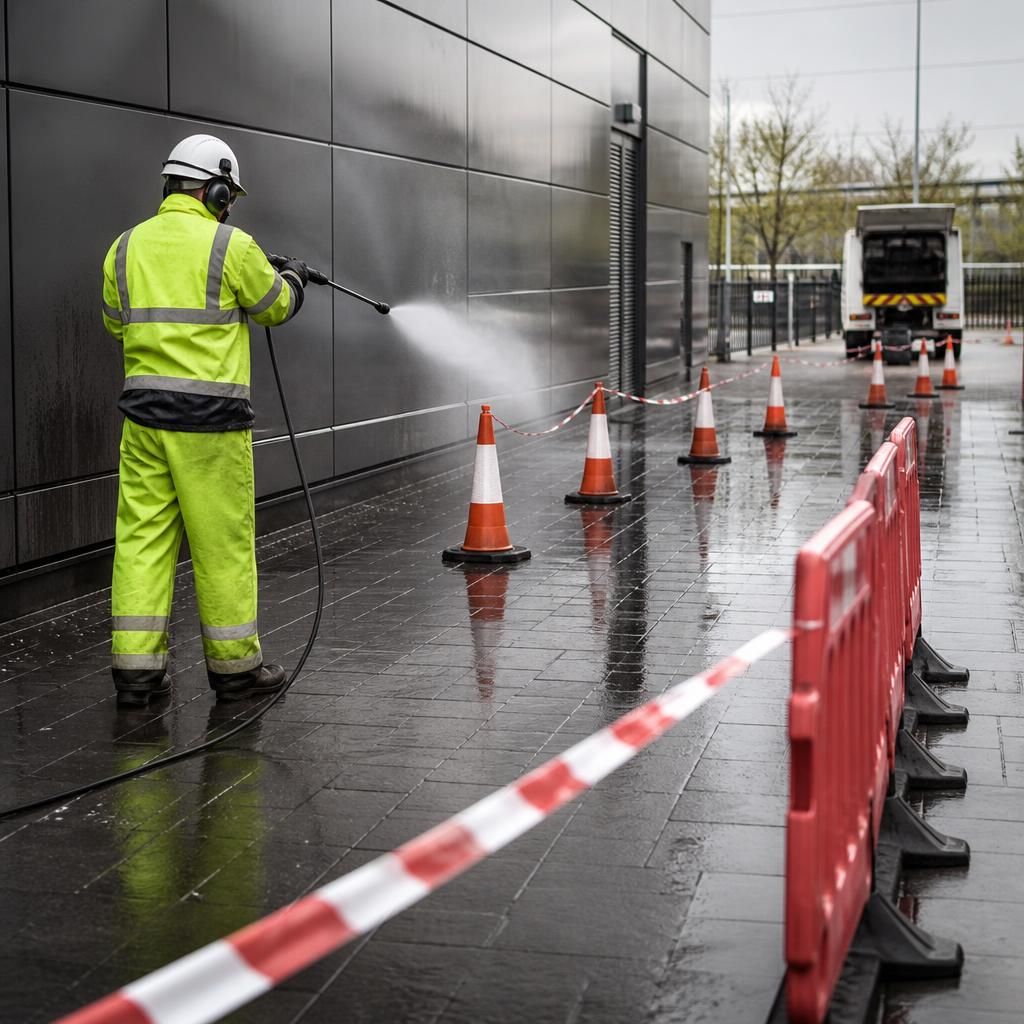
A secure exclusion zone is one of the main safety controls during commercial jet washing. Cones, barriers and warning signs keep pedestrians, staff, vehicles and other contractors away from high-pressure spray, flying debris and wet surfaces while cleaning is in progress.
Where the work takes place near entrances, car parks or active traffic routes, access can be managed with agreed diversions or a banksman. Water is directed away from walkways where possible, pooled water is cleared promptly, and barriers remain in place until the surface is safe to use. The completed area is checked for residual water, debris, chemical residue and equipment before it is handed back to the site contact.