
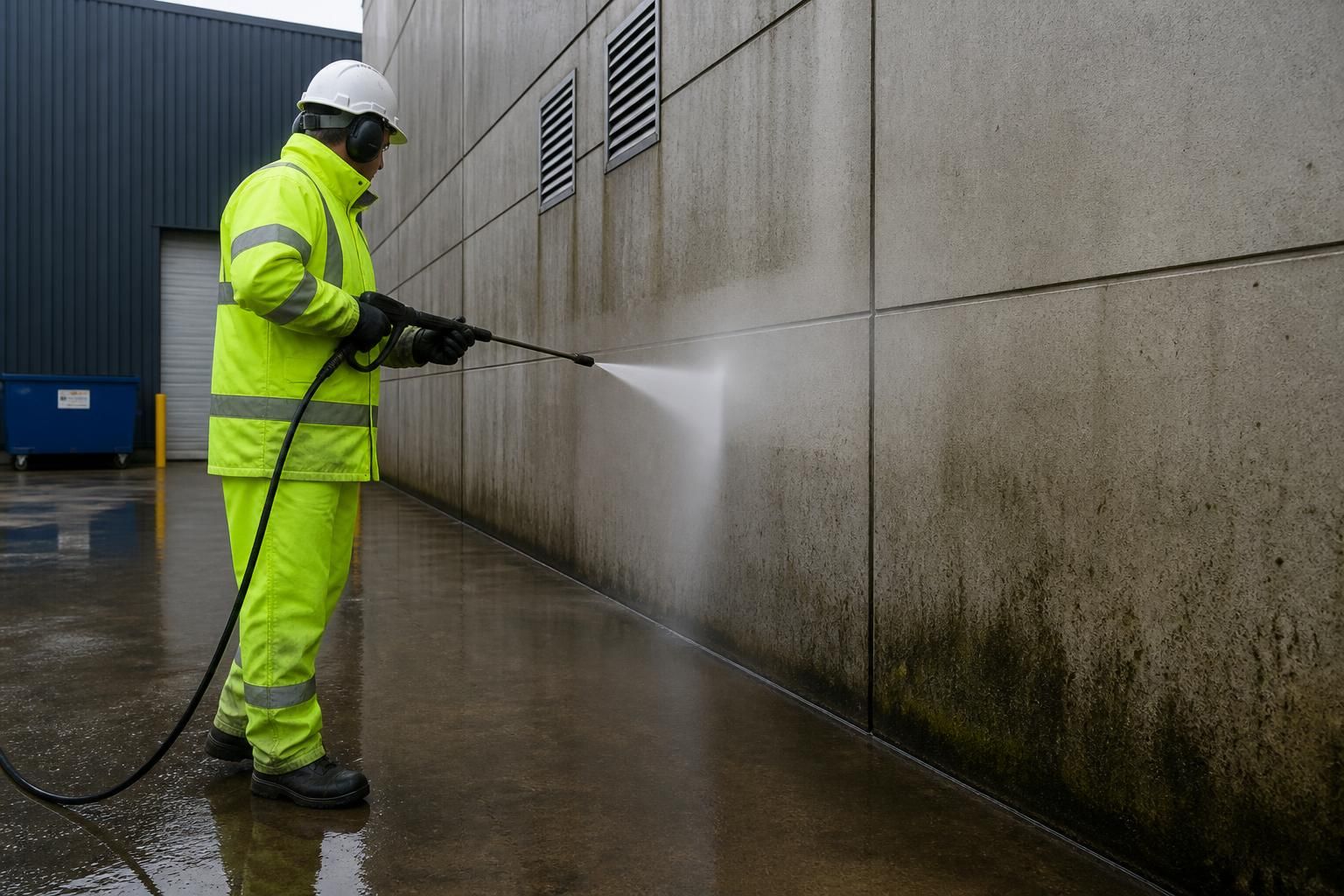
What factors should be considered to ensure the longevity and durability of surfaces after commercial jet washing?
Surface longevity after commercial jet washing depends on selecting the correct pressure, water temperature, cleaning method and equipment for the material and contamination. Careful pre-inspection, controlled application, effective rinsing, suitable post-treatment and a planned maintenance schedule help prevent damage, staining and premature deterioration.
Surface longevity after commercial jet washing depends on matching the cleaning method to the material, contamination and condition of the surface. The correct pressure, water temperature, flow rate, nozzle, cleaning solution and working distance must be selected before work begins. Thorough inspection, controlled application, effective rinsing, appropriate aftercare and planned maintenance then help prevent etching, surface loss, staining, corrosion and premature deterioration.
Assess the surface before cleaning
A pre-cleaning inspection is essential because two areas that appear similar may require very different treatment. The cleaning team should identify the surface material, finish, age, previous repairs, existing coatings and any signs of cracking, delamination, corrosion or water ingress. Particular care is needed around joints, sealants, vents, electrical fittings, painted finishes and vulnerable edges.
Small test patches should be used where the material or coating is uncertain. This confirms whether the proposed pressure, temperature and cleaning agent remove the contamination without changing the colour, texture or finish. The results should be reviewed before cleaning the wider area.
- Masonry and concrete: excessive pressure can remove the surface paste, expose aggregate or worsen existing defects.
- Brick and stone: porous or weathered materials can absorb water and may be damaged by aggressive cleaning or unsuitable chemicals.
- Cladding and painted metal: high pressure, abrasive dirt and incompatible detergents can mark or strip the finish.
- Roofing materials: tiles, membranes and coated sheets may be vulnerable to lifting, cracking, water penetration or coating loss.
- Block paving and concrete paving: incorrect technique can displace jointing material or create uneven cleaning patterns.
Use pressure and equipment appropriate to the material
Higher pressure is not automatically more effective or safer. The pressure at the surface is affected by the machine setting, nozzle type, spray pattern, distance and angle. A trained operative should use the lowest effective pressure and increase it only where testing shows that the material can tolerate it. Keeping the lance moving helps avoid concentrated damage, striping and visible patches.
Wide fan nozzles are generally more suitable for broad, robust areas than narrow jet patterns, which concentrate force in a small area. Rotary equipment can improve productivity on suitable hard surfaces, but it must be controlled carefully near edges, joints, fragile coatings and drainage channels. Access equipment should also be positioned so that hoses, tools and operators do not damage the surface or surrounding fixtures.
Water flow is important as well as pressure. Adequate flow helps carry loosened dirt away, whereas repeatedly blasting a surface because contamination is not being rinsed clear can increase wear. Equipment should be maintained so that pressure remains stable and the spray pattern is consistent.
Control water temperature and cleaning chemicals
Hot water or steam can be useful for grease, oils, chewing gum and biological growth, but heat must be suitable for the surface, coating and sealants. Sudden temperature changes may stress some materials, while excessive heat can soften coatings, damage membranes or affect jointing compounds.
Cleaning chemicals should be selected for the specific contamination rather than used as a substitute for suitable technique. Alkaline products may help with grease, while specialist treatments can be appropriate for organic growth or staining. The product must be compatible with the surface and diluted and applied according to its instructions. Uncontrolled use of acids, solvents or strong biocides can discolour masonry, corrode metal, damage vegetation and weaken protective finishes.
Where a chemical is used, it should not be allowed to dry on the surface. The area should be rinsed thoroughly, with particular attention to ledges, joints and recessed details where residues can remain. Run-off must be managed in accordance with the site’s drainage arrangements and environmental requirements.
Prepare the area and protect vulnerable details
Loose debris, surface dust and heavier deposits should be removed using the least aggressive practical method before jet washing. This reduces the need for prolonged high-pressure cleaning. Drainage outlets should be checked and kept clear, while doors, vents, signage, lighting, sensors, sockets and other sensitive components should be protected from direct spray and chemical contact.
Existing defects should be recorded before work starts. Cleaning cannot repair failed pointing, open cracks, loose render, damaged coatings or defective seals. If water could enter through a defect, the appropriate repair should be completed before cleaning or the affected area should be excluded and clearly noted. Cleaning a deteriorated surface without addressing its underlying weakness can accelerate failure.
Apply a consistent cleaning technique
Operatives should work in controlled sections, maintaining a consistent lance distance, angle, speed and overlap. This produces a more even result and reduces the risk of clean bands, shading and localised wear. The spray should generally be directed so that water does not drive behind cladding, under roofing materials or into joints and openings.
Particular caution is required at interfaces between different materials. A method that is suitable for a concrete apron may be unsuitable for adjacent brickwork, painted metal or sealant. Cleaning should therefore be adjusted as the surface changes rather than treating the whole elevation or site with one fixed setting.
Rinse, dry and inspect properly
Rinsing removes loosened contamination and chemical residue that could otherwise continue affecting the surface after the equipment has been removed. The rinse should be controlled to prevent dirty water spreading onto cleaned areas or entering sensitive building components.
After cleaning, the surface should be inspected in suitable lighting once it has dried sufficiently. The inspection should check for remaining contamination, streaking, coating loss, exposed aggregate, displaced jointing, water retention and damage to adjacent fixtures. Any concern should be recorded and addressed before the work is signed off. Photographic records and notes about the method used can help guide future maintenance and avoid repeating an unsuitable approach.
Consider protective treatments carefully
Some surfaces benefit from a compatible protective treatment after cleaning. Breathable water-repellent treatments may help reduce water absorption on suitable masonry, while appropriate sealers can assist with stain resistance on some paving or concrete surfaces. These products are not suitable for every material and should not be applied over damp, contaminated or structurally defective surfaces.
Before applying a treatment, the surface must be clean, sufficiently dry and free from salts or residues. Compatibility, appearance, vapour permeability, expected wear and future cleaning requirements should all be considered. A protective coating that traps moisture, changes the appearance or prevents future repairs may shorten rather than extend the surface’s service life.
Manage weather, drainage and the surrounding environment
Weather conditions affect both cleaning and drying. Heavy rain can dilute cleaning products and spread contamination, while freezing conditions can increase the risk of water trapped in pores or defects causing damage. Strong sunlight or wind may dry chemicals too quickly and leave residues or uneven results.
Water should be directed towards suitable collection or drainage points without flooding entrances, plant rooms, neighbouring premises or landscaped areas. Run-off controls are particularly important where oil, heavy metals, paint residues, biological treatments or other pollutants are present. Good site management protects the cleaned surface as well as the wider property and drainage system.
Follow a planned maintenance programme
Longevity is improved when cleaning removes contamination before it becomes strongly bonded or causes ongoing deterioration. Maintenance intervals should reflect the material, location, exposure, footfall, traffic, nearby construction, vegetation and type of soiling. High-traffic areas, shaded elevations and surfaces exposed to road spray or industrial deposits may need more frequent inspection than sheltered areas.
Routine checks should identify blocked drainage, recurring organic growth, oil deposits, failed joints, corrosion and new staining. Early, lower-impact cleaning is usually preferable to allowing deposits to build up until aggressive treatment is required. A site record should note the areas cleaned, observed defects, products used, test results and any recommendations for repairs or future visits.
Use a competent commercial cleaning team
Durable results depend on judgement as much as equipment. The contractor should be able to explain how the surface will be assessed, what test method will be used, why particular pressure and temperature settings are appropriate, how chemical run-off will be controlled and what limitations apply. Operatives should use suitable personal protective equipment, access systems and exclusion zones without allowing safety controls to compromise the surface or building fabric.
For commercial premises, the most reliable approach is a documented process: inspect and test first, select the least aggressive effective method, protect vulnerable areas, clean consistently, rinse and manage run-off, inspect the finished work and record recommendations. This combination of technical control and ongoing maintenance gives façades, roofs, paving, cladding and other external surfaces the best opportunity to remain sound and presentable for longer.
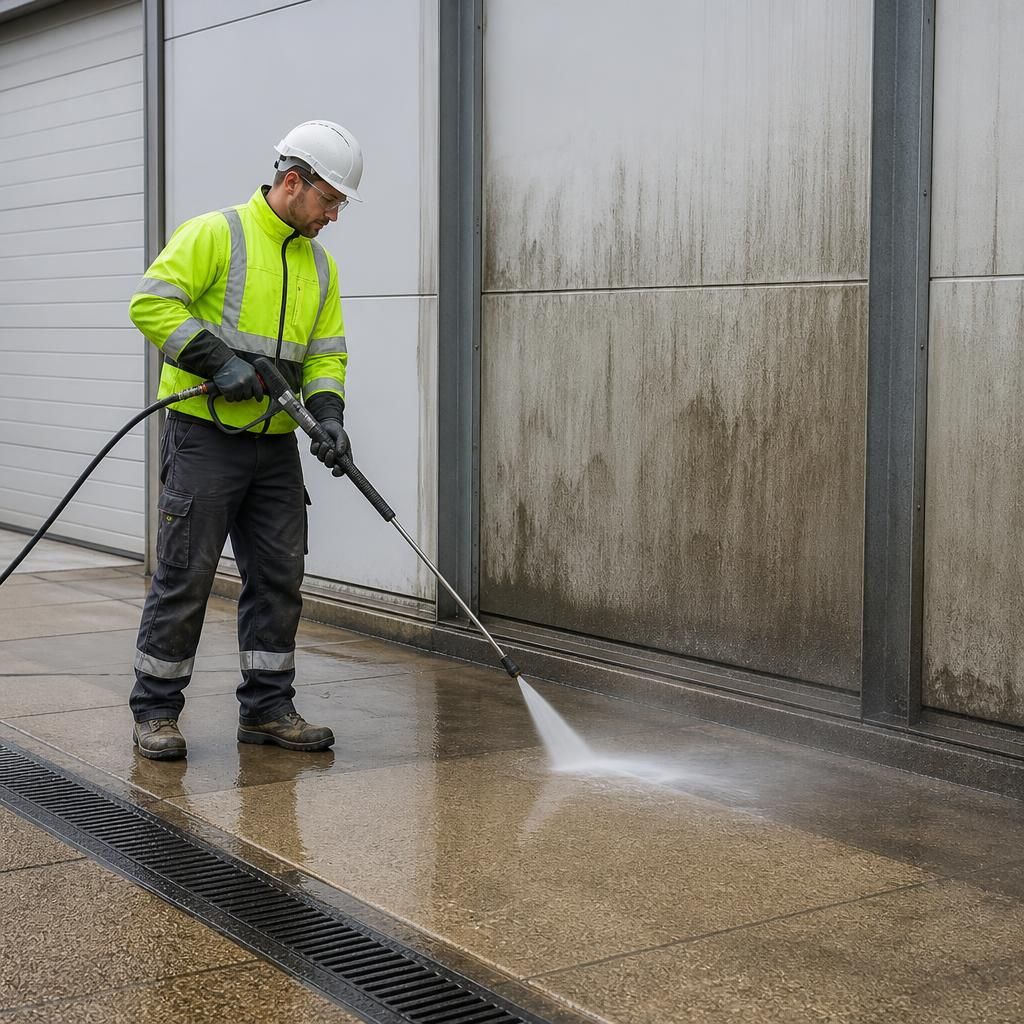
Using the lowest effective pressure is one of the most important ways to protect a surface during commercial jet washing. Before full cleaning begins, the operative should test a discreet area and adjust the pressure, nozzle, distance and water temperature to suit the material and contamination.
A controlled technique helps prevent etching, coating loss, exposed aggregate, displaced jointing and striping. The lance should remain at a consistent distance and keep moving, with extra care around edges, joints, sealants, vents and changes between materials. This approach removes contamination effectively without creating unnecessary wear that could shorten the surface’s service life.
Plan Commercial Jet Washing That Protects Surfaces for Longer
Speak to our team to arrange a surface assessment and agree a commercial jet washing method that protects your buildings, paving, cladding or roofing. We can also recommend an ongoing maintenance schedule based on the material, exposure and type of contamination.