
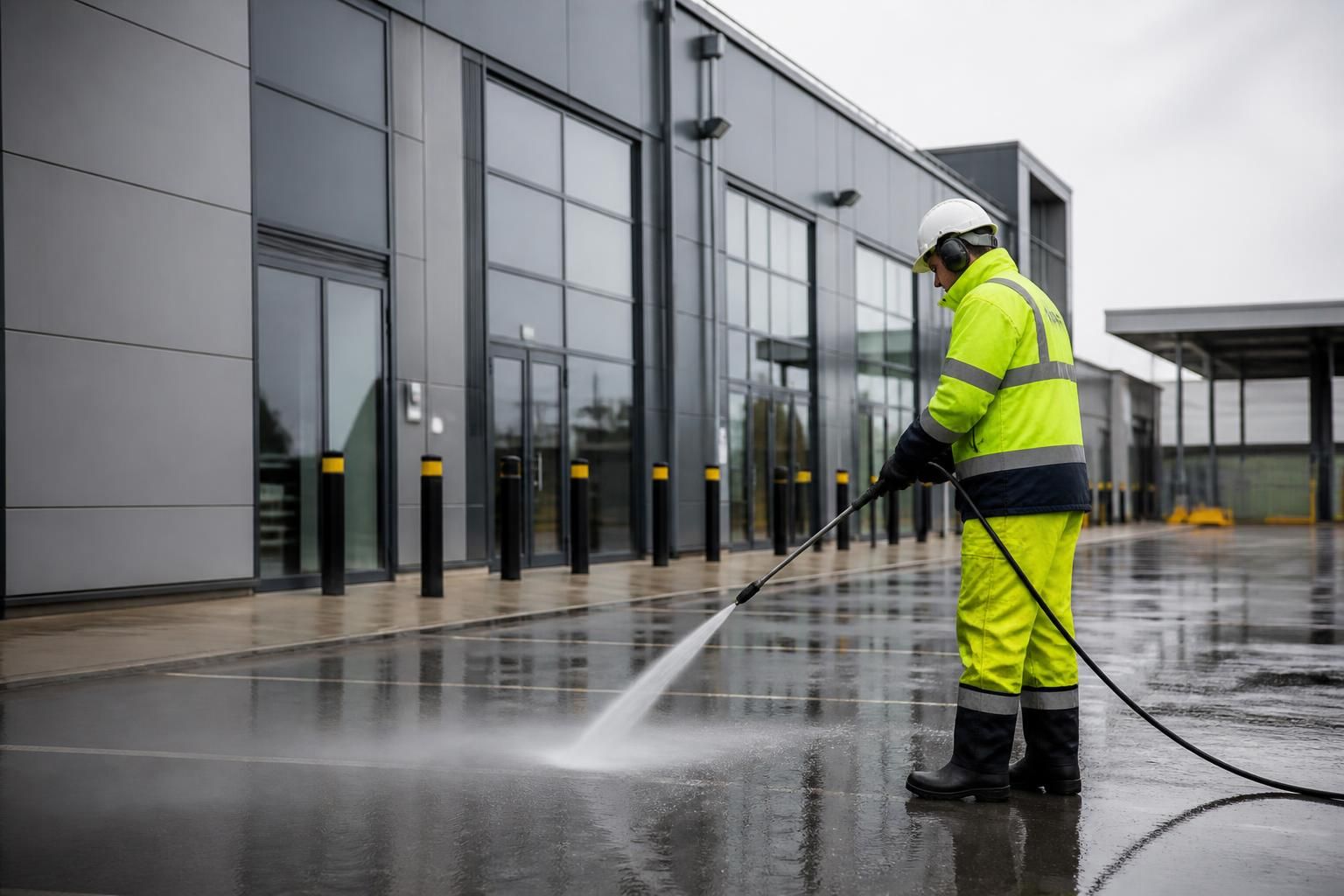
What criteria should be used to assess the quality and reliability of a commercial jet washing service provider?
Assess a commercial jet washing provider by checking its relevant experience, insurance, trained operators, risk assessments, method statements, equipment, environmental controls, references and ability to provide a clear, site-specific quotation. Reliability is also shown through effective communication, realistic scheduling, consistent standards and properly documented results.
A quality and reliable commercial jet washing service provider should be assessed against its relevant experience, technical competence, health and safety controls, equipment, environmental practices, communication, pricing transparency and ability to deliver consistent results. The provider should be able to explain how it will clean the specific surfaces and contaminants on your site, manage the associated risks and demonstrate that it can complete the work without causing damage, disruption or uncontrolled run-off.
Relevant commercial experience
Choose a contractor with experience of work similar to your own premises rather than relying solely on general domestic pressure-washing experience. Commercial and industrial sites may include large paved areas, loading bays, façades, cladding, roofs, car parks, yards and access routes, each requiring different pressures, temperatures, detergents and access arrangements.
Ask whether the provider has worked with comparable surfaces, contamination and site conditions. Experience should include practical knowledge of oil and fuel residues, chewing gum, algae, moss, ingrained traffic film, construction debris, efflorescence and graffiti. A capable contractor should also understand how cleaning can affect coatings, jointing, drainage systems, painted finishes, sealants and nearby landscaping.
Site survey and method selection
A reliable provider should inspect the site, or obtain sufficient technical information, before issuing a final quotation. The assessment should consider:
- the type, condition and age of each surface;
- the nature and extent of the contamination;
- drainage points, watercourses, sensitive planting and neighbouring property;
- pedestrian and vehicle movements;
- available water, power and access arrangements;
- working height, restricted areas and the need for access equipment;
- the required finish and any operational deadlines; and
- whether contaminated water, debris or chemical residues need to be contained and removed.
The proposed method should be site-specific. Jet washing is not a single process: the contractor may need to combine pressure washing with hot-water cleaning, steam cleaning, soft washing, chemical treatment, rotary surface cleaning, manual agitation or specialist graffiti removal. The provider should explain why the selected method is suitable and how it will avoid excessive pressure, heat or chemical exposure.
Equipment and technical capability
Assess whether the contractor has suitable, well-maintained equipment for the work rather than simply owning a powerful pressure washer. Useful capabilities may include adjustable-pressure systems, hot-water units, steam equipment, surface-cleaning attachments, recovery systems, water bowsers, wet vacuums and access equipment where appropriate.
Equipment should be selected according to the substrate and cleaning objective. High pressure may be appropriate for some robust concrete areas but unsuitable for aged masonry, delicate pointing, coated cladding or vulnerable paving. A professional operator should be able to adjust pressure, flow, temperature and cleaning agents, and should test a discreet area where there is a risk of marking, etching, colour loss or water penetration.
Ask how equipment is maintained and how failures are handled. Planned maintenance, pre-use checks and access to suitable replacement equipment reduce the risk of avoidable delays. Operators should also use suitable hoses, electrical protection, warning systems and attachments for the site conditions.
Training, competence and supervision
The people carrying out the work should be trained and competent in pressure-washing techniques, chemical handling, manual handling, work at height and the operation of any access equipment used. Competence should reflect the actual work, not just attendance on a general course.
Where the project involves roofs, elevated façades, traffic routes, confined areas or contaminated surfaces, ask who will supervise the work and how operator competence will be verified. The team should understand the risks of slips, hose movement, flying debris, overspray, electrical hazards, falling objects, vehicle movements and contact with cleaning chemicals.
Health and safety arrangements
For commercial work, the provider should supply suitable risk assessments and method statements before work begins. These documents should describe the hazards identified on your site and the controls that will be used, rather than relying on generic wording.
Look for clear arrangements covering exclusion zones, pedestrian and traffic management, signage, barriers, personal protective equipment, work at height, access equipment, emergency procedures, first aid, weather conditions and safe storage of fuels or chemicals. If the work is part of a construction project or takes place on an active construction site, the contractor should also be able to work within the principal contractor’s site rules and document requirements.
It is also sensible to confirm that the provider holds appropriate public liability and, where relevant, employers’ liability insurance. Request evidence of cover and check that the level and scope are suitable for the scale and type of work being commissioned.
Environmental and wastewater controls
A responsible provider should explain where wash water, silt, oil, detergent and removed surface material will go. Uncontrolled discharge into surface-water drains can cause pollution and may breach local requirements. The method should identify drainage risks and state whether drains will be protected, isolated, filtered or connected to an approved foul-water disposal route.
Where contamination is significant, the contractor may need to recover wash water, separate solids, contain pollutants and arrange lawful disposal. Ask what detergents are proposed, whether less harmful alternatives are suitable and how chemical use will be controlled. Good environmental practice also includes avoiding unnecessary water use, preventing overspray and protecting soil, planting, vehicles and neighbouring buildings.
Quality control and protection of surfaces
Quality should be judged by more than how clean an area looks immediately after washing. The provider should agree the required standard in advance and identify any existing staining, damage, weathering or colour variation that may remain after cleaning.
A sound process normally includes a pre-start inspection, test cleaning where appropriate, protection of vulnerable areas, controlled application of the chosen method and a final inspection. The contractor should check for missed sections, streaking, detergent residue, damage to joints or coatings, remaining slip hazards and water left in unsuitable locations.
For larger sites, ask how consistent results will be maintained between different areas or operatives. Photographic records, completion reports, snagging procedures and sign-off arrangements can provide useful evidence that the agreed scope has been delivered. If the service is ongoing, records also help compare changing surface conditions and plan future maintenance.
Quotation and scope of work
A dependable quotation should be sufficiently detailed to allow a fair comparison between providers. It should identify the areas to be cleaned, the proposed methods, preparation and protection, access requirements, wastewater arrangements, exclusions, expected working hours and any assumptions about water, power or parking.
Be cautious of a price that is significantly lower because important elements have been omitted. Clarify whether the quotation includes traffic management, equipment hire, chemical treatment, recovery and disposal of contaminated water, removal of heavy deposits, return visits and reinstatement of affected areas. The contractor should also explain how additional work will be authorised if concealed damage or unexpected contamination is found.
A clear scope protects both parties. It prevents disagreement about whether the objective is general visual improvement, removal of a particular contaminant, preparation for painting or restoration of a defined surface standard.
Reliability and communication
Reliability is demonstrated through organised communication before, during and after the work. The provider should respond clearly to site information, identify decisions needed from the client and provide realistic dates rather than promising an outcome that depends on unsuitable weather or unavailable access.
Confirm who will be your main contact, how changes or delays will be reported and how access problems will be managed. On operational premises, the contractor should coordinate with facilities teams, tenants, security staff, delivery schedules and other trades. A good provider will also explain what the site must do before arrival, such as removing vehicles, isolating areas or notifying occupants.
Reliability can be tested by checking whether the contractor arrives with the agreed equipment, follows the documented method, keeps the work area controlled and leaves the site in an acceptable condition. References from comparable commercial clients, examples of similar completed work and a clear complaints or remedial-work process can provide further reassurance.
Value, not just the lowest price
The most suitable provider is not necessarily the one offering the lowest initial quotation. Consider the total value of the service, including the likelihood of surface damage, disruption, repeat cleaning, environmental non-compliance or additional charges. A technically appropriate method may cost more at the outset but reduce the risk of premature surface deterioration and future corrective work.
Before appointing a contractor, compare the proposed methods, inclusions, safety documentation, environmental controls, insurance, programme and quality checks alongside the price. A provider that can answer these points specifically for your premises is more likely to deliver a controlled, repeatable and reliable commercial jet washing service.
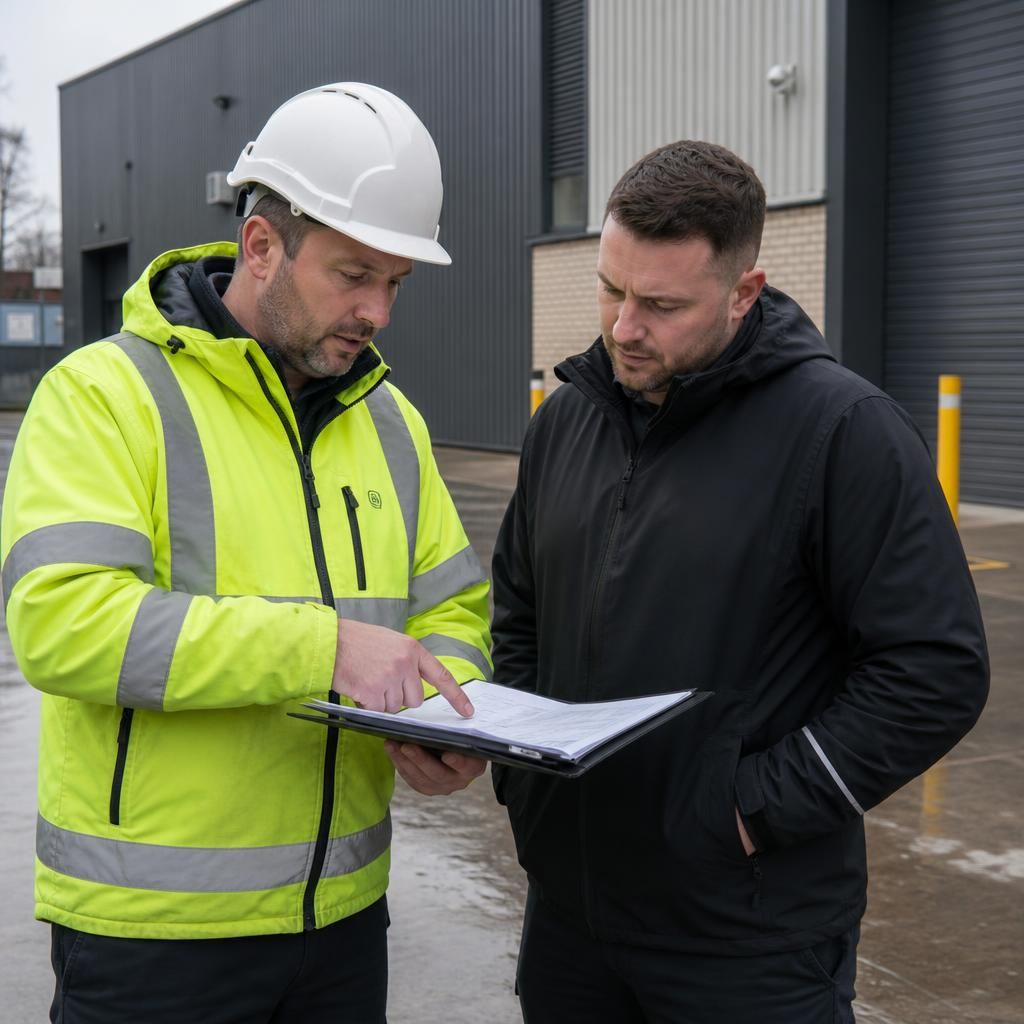
A reliable commercial jet washing provider should issue a site-specific quotation that clearly defines the work, cleaning method and expected outcome. The price should relate to the surfaces, contamination, access requirements and environmental controls identified during a site survey, rather than being based on a generic rate.
Before comparing quotations, check whether each one includes:
- the areas and surfaces to be cleaned;
- the proposed pressure, temperature or treatment method;
- access equipment, traffic management and site protection;
- wash-water recovery, filtration and lawful disposal where required;
- working-hour restrictions, exclusions and assumptions; and
- the process for approving additional work if hidden damage or heavier contamination is found.
A significantly lower price may indicate that important controls or preparation have been omitted. Comparing the full scope, safety arrangements and quality checks alongside the cost gives a more accurate assessment of value and helps prevent unexpected charges or avoidable surface damage.
Request a site-specific commercial jet washing assessment
Request a site-specific commercial jet washing assessment from Encanto Exterior Cleaning, including recommended methods, access requirements, safety controls and wastewater arrangements. We can then provide a clear quotation based on your premises, surfaces and cleaning objectives.