
What are the safety measures and environmental considerations associated with commercial jet washing services?
Commercial jet washing services should combine controlled equipment use, site risk assessments, suitable protective equipment and protection of nearby people and property with responsible water and waste management. Effective contractors contain dirty run-off, use appropriate pressure and cleaning products for the surface, and follow relevant health, safety and environmental requirements.
Commercial jet washing should be planned as a controlled work activity, not treated as simple high-pressure spraying. A competent contractor will assess the site and surface before work begins, select suitable pressure, temperature and cleaning products, protect people and property, and control water, contaminants and waste from the point of application through to disposal.
The exact precautions depend on the location, building materials, contamination, access arrangements and drainage system. A busy retail park, industrial unit, car park and public footpath will each require different controls. The method statement and risk assessment should therefore be specific to the site rather than copied from a generic template.
Site risk assessment and method statements
Before starting, the contractor should identify hazards and explain how the work will be completed safely. This normally includes checking:
- the condition and construction of the surface, including loose paving, damaged cladding, fragile coatings and defective pointing;
- nearby pedestrians, vehicles, staff, customers, residents and members of the public;
- access routes, delivery areas, plant movements and emergency exits;
- overhead cables, electrical equipment, lighting, ventilation openings and sensitive building systems;
- work at height requirements, including roofs, façades, canopies and elevated platforms;
- drainage, surface water outlets, interceptors and any environmentally sensitive areas;
- the likely presence of oil, fuel, chemicals, biological growth, bird fouling, lead-based coatings or other hazardous contamination; and
- weather, wind, visibility, noise and any restrictions imposed by the site operator or local authority.
The assessment should lead to clear controls, including the equipment to be used, the areas to be isolated, the required personal protective equipment, the treatment and disposal of wastewater, and the action to take if an unexpected hazard is discovered.
Protecting people on and around the site
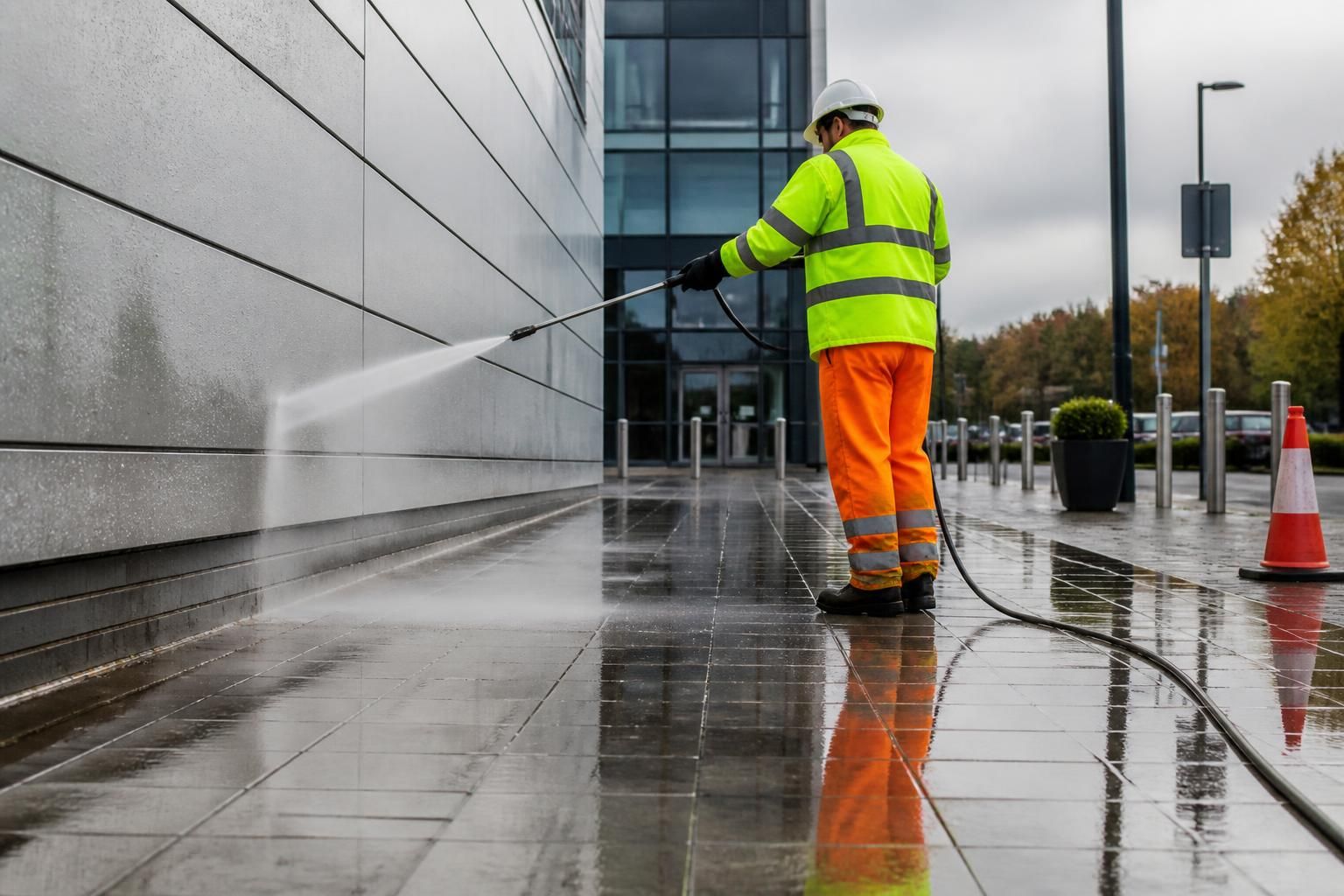
Jet washing can create high-pressure spray, flying debris, slippery surfaces and reduced visibility. Work areas should be separated from pedestrians and vehicles using suitable barriers, cones, warning signs or a managed exclusion zone. On operational premises, cleaning may need to be phased around opening hours, deliveries or staff movements. A banksman or other traffic-management arrangement may be appropriate where hoses, vehicles or machinery cross active routes.
Operatives should be trained in the equipment and cleaning method being used. They need to understand the risks of directing a jet towards people, glazing, electrical fittings, ventilation openings or unstable materials. Hoses should be routed to reduce trip hazards and protected where they cross unavoidable access points. The area should remain controlled until standing water has been removed or the surface is safe to use.
Appropriate PPE may include waterproof protective clothing, gloves, safety footwear with suitable slip resistance, eye or face protection and hearing protection. Respiratory protection may also be required when chemicals, aerosols or contaminated deposits create an inhalation risk. PPE is an additional control; it does not replace safe equipment settings, isolation and good site management.
Safe use of jet-washing equipment
Pressure, flow rate, water temperature and nozzle selection should be matched to the surface and contamination. Excessive pressure can remove pointing, damage coatings, force water behind cladding or seals, mark soft masonry and break already weakened concrete. A competent operative will normally test a discreet area first and adjust the method if the surface reacts adversely.
Equipment should be maintained, inspected and used in accordance with the manufacturer’s instructions. This includes pumps, hoses, trigger guns, lances, electrical connections, fuel systems, access equipment and protective guards. Where applicable, businesses should ensure equipment is properly selected, maintained and inspected in line with the Provision and Use of Work Equipment Regulations and electrical safety requirements. Faulty hoses, damaged connections and leaking equipment should be taken out of service.
Noise and exhaust emissions also need consideration, particularly in enclosed areas or near occupied premises. Petrol or diesel-powered machinery should not be operated where fumes could accumulate, and suitable ventilation is essential. Alternatives such as electrically powered equipment may be appropriate where they can be used safely and the site has suitable supplies.
Work at height and difficult access
Cleaning façades, roofs, canopies and high-level signage can involve ladders, mobile elevated work platforms, scaffolding or specialist access equipment. The safest approach is to avoid work at height where a ground-based lance or other method can achieve the required result. If height access is necessary, it should be planned under the Work at Height Regulations, with suitable equipment, trained operators, stable ground, edge protection and rescue arrangements where required.
Jet reaction forces can affect balance, especially when a long lance is used from a platform or ladder. Operatives should not improvise access arrangements or work from unsuitable ladders. Access equipment must be appropriate for the task, inspected and positioned so that the operator can work without overreaching.
Chemical and contamination controls
Cleaning products should be selected for the material and the type of deposit. Product labels and safety data sheets should be followed, including requirements for dilution, storage, handling, ventilation, PPE and first aid. Under the Control of Substances Hazardous to Health Regulations, employers should assess exposure to hazardous substances and provide suitable controls and training.
Acidic, alkaline, solvent-based and biocidal products can damage surfaces, harm vegetation or contaminate drainage if misused. Products should never be mixed unless the manufacturer specifically permits it. Overspray should be controlled around windows, painted finishes, landscaping, watercourses and neighbouring property. Bird fouling, mould and other biological contamination may require additional hygiene controls, including careful collection, containment and disposal rather than simply spreading the material with high-pressure water.
Managing water and wastewater responsibly
Environmental protection depends largely on where the water goes after cleaning. Dirty water can carry silt, oil, detergents, paint particles, metals, biological material and other pollutants into surface-water drains or soil. Surface-water drains commonly discharge to the environment without the treatment provided by a foul-water system, so they must not be used for contaminated wash water without appropriate authorisation.
Before work starts, the drainage layout should be identified and outlets protected where necessary. Typical controls include drain covers, bunds, absorbent barriers, temporary dams, wet vacuums, recovery systems, settlement tanks and suitable filtration. Captured water should be assessed before discharge. Depending on its composition and the site, it may need to be removed by a licensed waste carrier or discharged to the foul sewer with permission from the relevant water company under trade-effluent arrangements.
Permission to discharge should never be assumed. Requirements can vary according to the substance, volume, location and receiving drainage system. Wastewater containing oil, chemicals, heavy deposits or other controlled contaminants may require specialist handling. Records of disposal, consignment notes or trade-effluent permissions should be retained where applicable.
Reducing water and chemical use
Responsible cleaning is not simply a matter of using biodegradable products. The contractor should use the least aggressive effective method, avoid unnecessary repeat passes and select equipment settings that provide adequate cleaning without excessive water consumption. Steam cleaning, low-pressure washing, controlled detergents, surface agitation or targeted spot treatment may be more suitable than maximum-pressure washing in particular areas.
Water use can be reduced through controlled application, trigger-operated equipment, recovery systems and reuse where the recovered water is suitable for the intended purpose. Chemical use should be proportionate to the contamination, accurately diluted and prevented from entering soil, planting beds or watercourses. A product described as environmentally preferable is not automatically safe for every drain or habitat; its disposal instructions and site conditions still apply.
Protection of buildings, landscaping and neighbouring property
Windows, doors, vents, air-conditioning units, electrical components, fragile coatings and internal spaces should be protected from water and spray. Operatives should check for routes through cracks, joints and service penetrations before cleaning. Any pre-existing defects should be recorded so that the chosen method does not worsen them or create uncertainty about subsequent damage.
Plants, soil, ponds and landscaped areas should be shielded from overspray and chemical run-off. Vehicles and nearby property may need to be moved or covered, although covers must not create additional hazards in windy conditions. On shared or adjoining sites, the work plan should address spray drift, noise, access and the timing of cleaning.
Weather, slips and emergency arrangements
Wind can carry spray and chemical mist beyond the intended work area, while freezing conditions can turn residual water into an immediate slip hazard. Heavy rain can overwhelm containment measures and spread pollutants. Work may need to be postponed or modified when weather makes the operation unsafe or prevents effective wastewater control.
The site team should know how to respond to a hose failure, chemical spill, loss of containment, equipment fault, injury, contact with contaminated material or accidental discharge. Spill kits, first-aid arrangements, emergency contact details and an incident-reporting process should be available where the risk assessment identifies a need for them. Any pollution incident should be contained promptly and reported through the appropriate site and regulatory channels.
What a responsible commercial service should provide
For a significant or sensitive project, it is reasonable to expect a clear scope of work, site-specific risk assessment and method statement, product information, evidence of operator competence, details of access arrangements and an explanation of wastewater controls. The contractor should also confirm what happens to recovered water, solid waste and contaminated materials rather than describing disposal in vague terms.
After completion, the work area should be inspected for remaining slip hazards, blocked drains, damage, chemical residue and uncontrolled run-off. Useful records may include photographs, cleaning and product details, inspection notes, waste-transfer documentation and any discharge permission. These measures provide a practical audit trail and help inform safer maintenance on future visits.
In short, safe and environmentally responsible commercial jet washing combines proportionate pressure and chemical selection with competent operatives, controlled access, protection of the surrounding property and full management of wastewater and waste. The most reliable approach is to agree these controls during the site survey, before equipment arrives and before contaminated water can enter the drainage system.
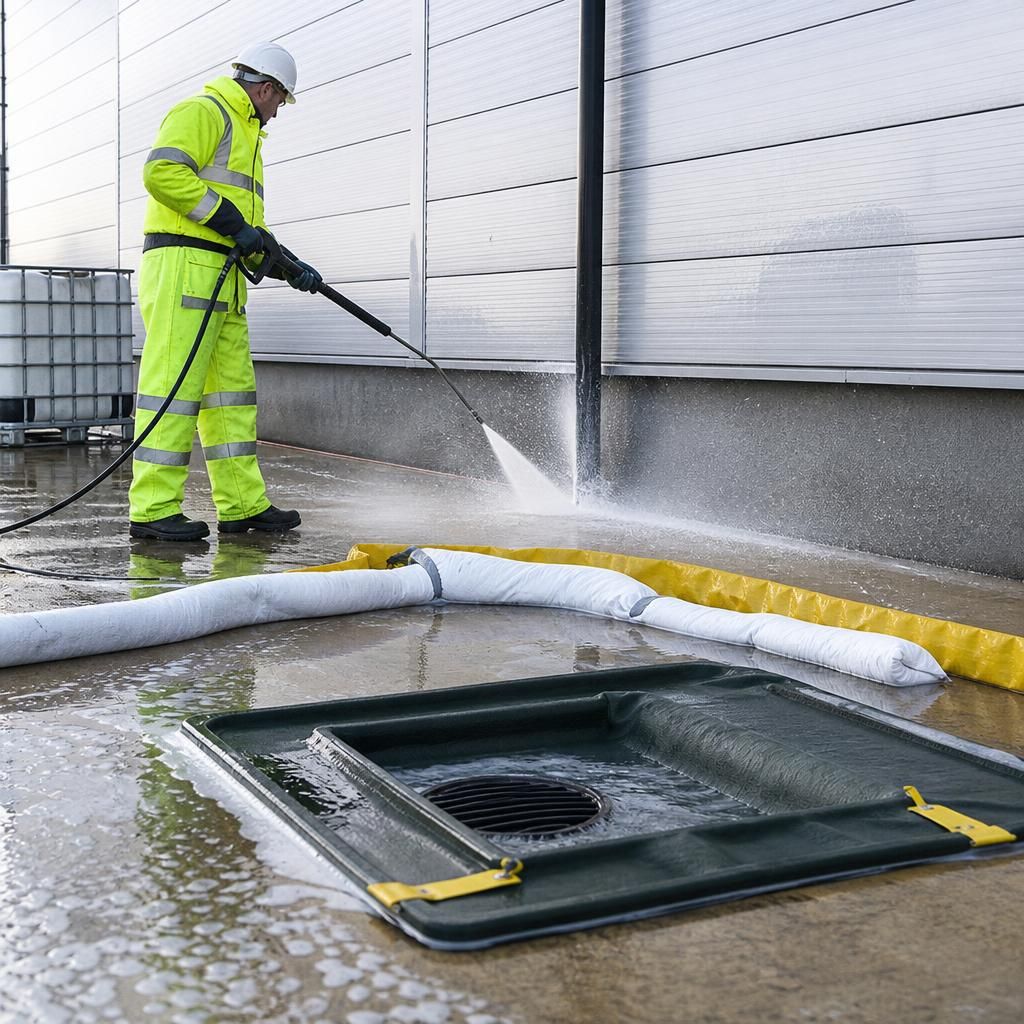
Environmental protection during commercial jet washing depends on controlling dirty wastewater before it reaches drains, soil or watercourses. Wash water can carry oil, silt, detergents, paint particles and biological contamination, so it should be contained, recovered and disposed of through an appropriate authorised route.
Before cleaning begins, the drainage layout should be checked and vulnerable outlets protected with drain covers, bunds or absorbent barriers. Wet vacuums, settlement tanks and filtration can help recover contaminated water. Discharge to a foul sewer should only take place with the relevant permission, while heavily contaminated water may need removal by a licensed waste carrier. This approach prevents pollution and provides a clear record of how wastewater was managed.
Arrange a Safe, Environmentally Responsible Jet Washing Assessment
Arrange a site assessment to review access, surface risks, drainage and wastewater controls before your commercial jet washing work begins. We will recommend a safe, environmentally responsible cleaning method suited to your Birmingham or UK premises.