What are the environmental impacts of commercial jet washing?
Commercial jet washing can affect the environment through water consumption, contaminated runoff, energy use and cleaning chemicals entering drainage systems or nearby land. These impacts can be reduced by using efficient equipment, selecting suitable detergents, controlling runoff and recovering or disposing of wastewater responsibly.
Commercial jet washing can affect the environment through water consumption, contaminated runoff, cleaning chemicals, energy use, noise and waste. The main risk is not the pressure-washing process itself, but allowing dirt, oil, metals, paint residues, biocides or detergents to enter surface-water drains, soil or watercourses without suitable control.
Environmental impact varies according to the surface, the contamination being removed, the equipment used and how wastewater is managed. Cleaning a lightly soiled façade presents different risks from degreasing a vehicle yard, removing graffiti or washing a heavily trafficked car park.
Water consumption
Jet washing uses water to loosen and remove contamination. Poorly maintained equipment, unsuitable nozzles or excessive cleaning time can increase consumption without improving the result. Repeated cleaning may also use more water than a planned maintenance programme that removes deposits before they become established.
Water use can be reduced by:
- Using equipment with the appropriate flow rate and pressure for the surface.
- Pre-sweeping or scraping loose debris before washing.
- Applying detergents accurately rather than repeatedly washing an area.
- Using hot-water or steam-cleaning methods where they reduce the need for chemicals or prolonged rinsing.
- Recovering and reusing water where the equipment and contamination allow it.
- Planning the work so that avoidable re-cleaning is not required.
Higher pressure does not automatically mean a more sustainable clean. The correct combination of pressure, temperature, flow and dwell time generally produces a better balance between cleaning performance and resource use.
Contaminated surface water and runoff
Runoff can carry pollutants away from the cleaning area. Common examples include oils and fuels from car parks, heavy metals from vehicle areas or industrial surfaces, sediment, rubber deposits, algae, moss, paint particles and residues from bird fouling. If this water enters a surface-water drain, it may reach a stream, river or other watercourse with little or no treatment.
Surface-water drains are not normally intended to receive polluted wash water. Wastewater should therefore be assessed before work begins, with drainage routes identified and suitable containment or recovery measures put in place. Depending on the site and the material removed, this may include drain covers, temporary bunding, booms, wet vacuums, collection tanks, filtration or a controlled discharge to the foul-water system where permitted.
Wastewater must not be discharged to a drain, sewer, watercourse or land simply because it appears clear. Pollution can be dissolved or too fine to see. Requirements may depend on the site drainage, the substances present and the approval of the relevant sewerage or environmental authority. Where disposal is needed, the waste should be handled through an appropriate, authorised route and records retained where required.
Cleaning chemicals and detergents
Detergents, degreasers, biocides, graffiti removers and other treatments can affect aquatic life and soil if they are allowed to escape from the work area. Some products can also alter water chemistry or mobilise contaminants that were previously attached to the surface. This is particularly relevant when cleaning oil-stained concrete, industrial yards, roofs or façades with established biological growth.
Reducing chemical impact involves selecting the least harmful product that will achieve the required result, following the manufacturer’s instructions and avoiding unnecessary application. Products should never be mixed unless the instructions specifically permit it. The cleaning team should also allow the correct dwell time and use controlled rinsing, rather than applying excessive quantities to compensate for unsuitable methods.
Product safety information should be reviewed before work starts. This helps identify whether a treatment is suitable for the surface, nearby planting, drainage arrangements and the type of contamination present. Any remaining product, empty containers and contaminated absorbents should be managed as waste in accordance with their classification.
Energy use, emissions and noise
Pressure washers, steam cleaners, water-recovery systems and access equipment require energy. Fuel-powered machinery can produce exhaust emissions, while electrically powered equipment transfers its environmental impact to the electricity supply. Energy use is influenced by the equipment selected, water temperature, operating time, travel requirements and whether the work needs powered access equipment.
Impacts can be limited by using well-maintained equipment, avoiding unnecessary idling, selecting an appropriate power source and planning work efficiently. Where practical, electrically powered equipment may reduce local exhaust emissions and noise, although its overall environmental benefit depends on the electricity source and the equipment’s efficiency.
Noise and vibration can also affect occupants, neighbouring businesses and nearby wildlife. Scheduling disruptive work appropriately, keeping equipment maintained and using the least intensive method that will safely complete the task can reduce disturbance. Additional controls may be needed near hospitals, schools, residential areas or sensitive habitats.
Effects on buildings, soil and vegetation
Incorrect pressure or temperature can damage coatings, mortar joints, pointing, sealants, render, roof materials and fragile surfaces. Damage may create additional waste and lead to premature repair or replacement, increasing the overall environmental cost of the maintenance work.
Runoff containing detergents, oils, masonry residues or biocides can harm planted areas and soil. Landscaping, tree pits, ponds and drainage channels should be identified during the site assessment. Plants and vulnerable features may need protection, and contaminated water should be prevented from collecting around building foundations or being absorbed into unprotected ground.
Cleaning can also disturb nesting birds, insects and other wildlife, particularly when work involves roofs, vegetation-covered façades or structures used for shelter. A suitable pre-work inspection helps identify obvious ecological constraints. If protected species or active nests may be present, the work should be paused or adjusted and appropriate specialist advice obtained.
Waste generated by jet washing
Collected sludge, silt, oil residues, paint fragments and contaminated absorbent materials may need to be treated as controlled waste. Sweeping this material into a drain or leaving it on site transfers the pollution rather than removing it. Waste should be contained, classified where necessary and sent through an appropriate disposal or treatment route.
Responsible waste management also includes limiting disposable materials, using reusable recovery equipment where suitable and keeping cleaning-product containers secure. A clear record of what was removed, how it was contained and where it was sent can support the site’s environmental procedures and provide useful evidence for audits.
How businesses can reduce the environmental impact
- Inspect the surface and contamination before choosing the cleaning method.
- Identify all nearby drains, watercourses, planted areas, entrances and sensitive features.
- Use the lowest effective pressure, flow and temperature for the material being cleaned.
- Choose biodegradable or lower-impact products only when they are suitable for the contamination and surface.
- Prevent polluted runoff from entering surface-water drainage systems.
- Recover, filter, store and dispose of wastewater through an appropriate route where required.
- Keep detergents and fuels secure and prevent spills during preparation and cleaning.
- Use well-maintained, efficient equipment and avoid unnecessary idling or repeat visits.
- Protect vegetation, wildlife, building materials and neighbouring premises.
- Record the method, products used, wastewater controls and waste-disposal arrangements.
A competent commercial cleaning contractor should discuss these controls during the survey rather than treating environmental management as an afterthought. For larger industrial or multi-site work, the method statement should explain drainage protection, chemical selection, wastewater recovery, waste transfer and the response to a spill or unexpected contamination.
For an existing cleaning programme, the environmental review can be incorporated into routine planning. The most effective approach is usually to match the cleaning method to the contamination, control runoff at source and remove only what is necessary. This protects drainage systems and surrounding areas while preserving the surface and avoiding resource use that does not contribute to a better clean.
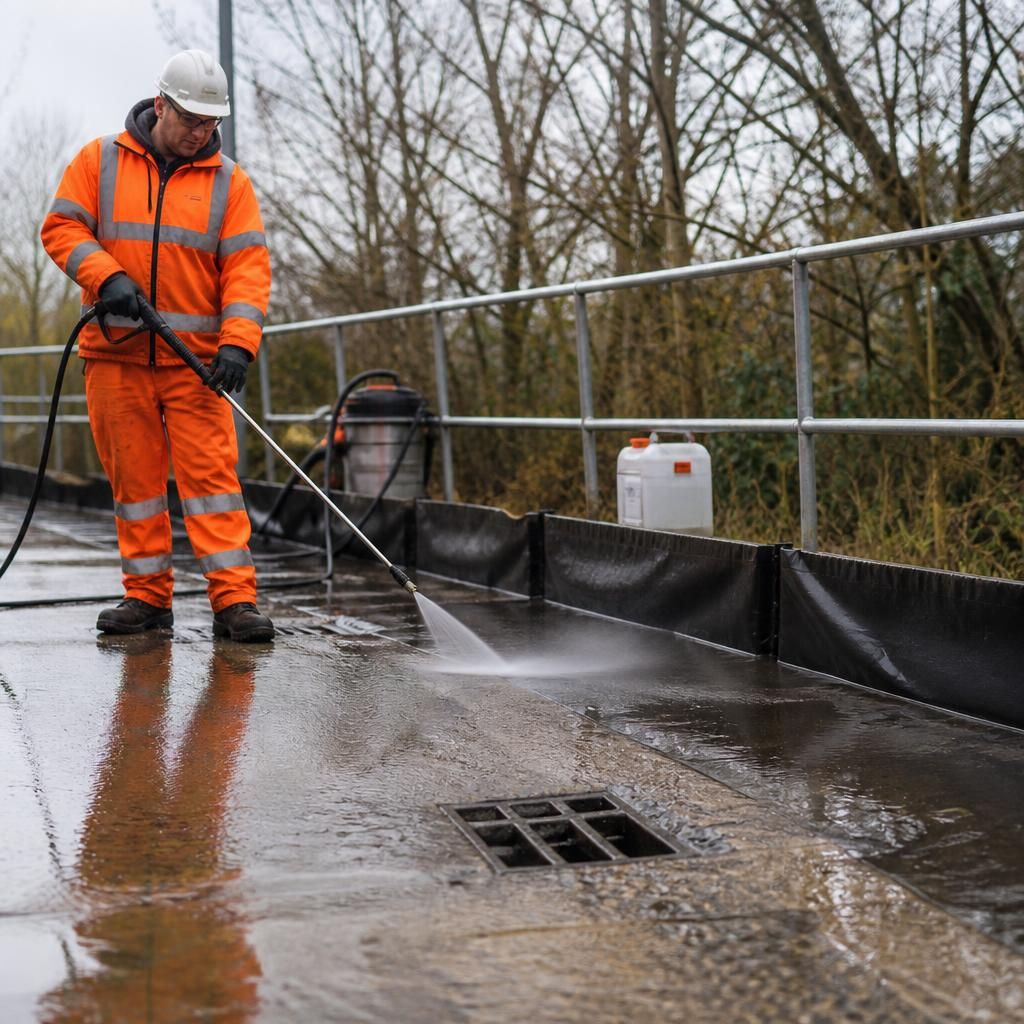
The main environmental risk from commercial jet washing is contaminated wastewater entering surface-water drains, soil or nearby watercourses. Runoff can carry oil, fuel, sediment, heavy metals, paint particles, detergents and biological residues away from the cleaning area, even when the water appears clear.
Before work starts, the drainage layout and surrounding features should be assessed. Suitable controls may include drain covers, temporary bunding, wet vacuums, filtration and wastewater collection. Recovered water should be stored and disposed of through an appropriate route, rather than discharged without checking the site requirements. Using the lowest effective pressure and applying only the necessary cleaning products also reduces water use and the risk of releasing additional contaminants.