
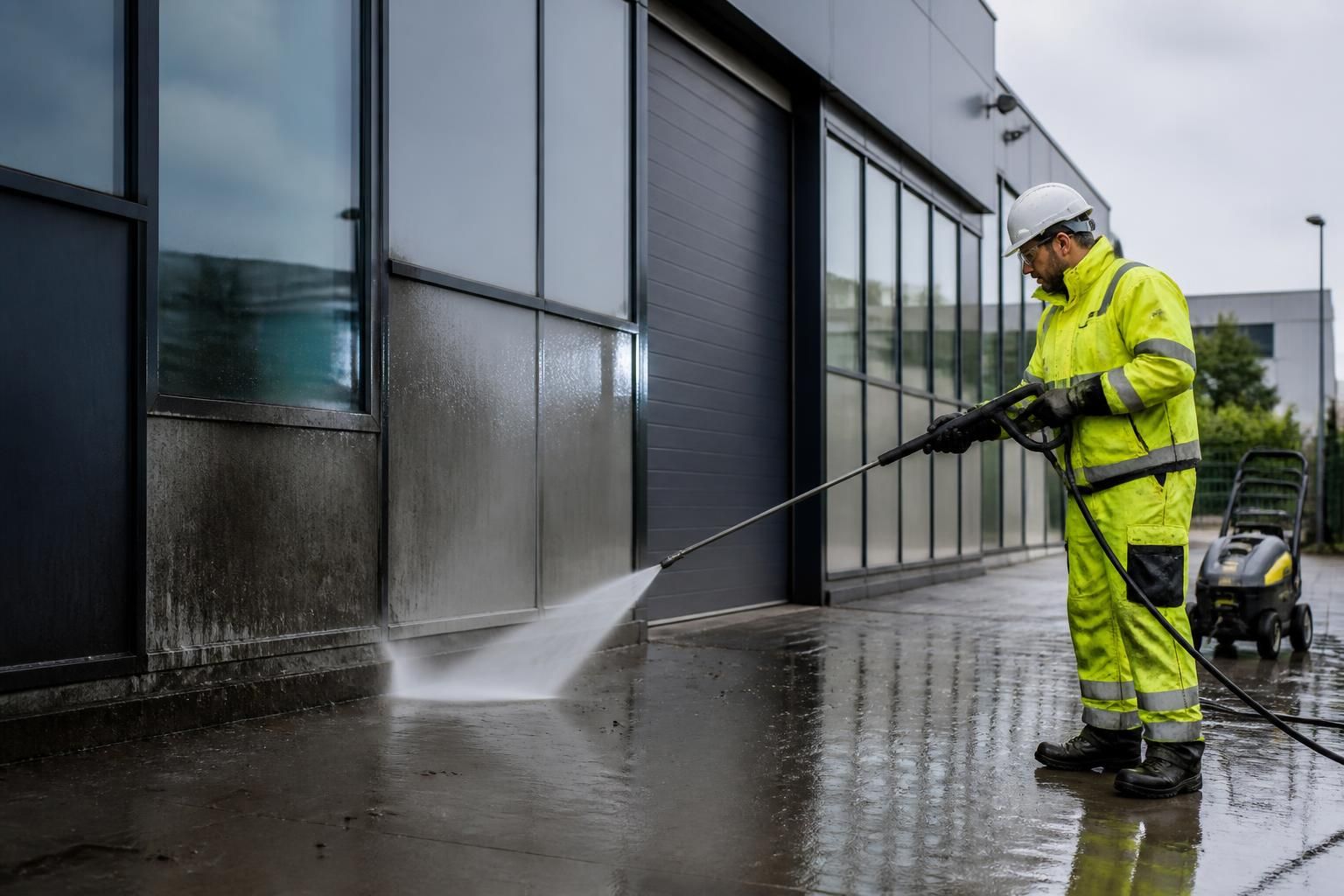
How often should commercial properties schedule jet washing services?
Commercial properties should schedule jet washing according to surface type, footfall, weather exposure, contamination levels and site-use requirements. High-traffic or heavily exposed areas may need seasonal or more frequent cleaning, while less-used surfaces can usually be managed through a planned annual maintenance schedule and additional cleaning when required.
Commercial properties should schedule jet washing as part of a planned maintenance programme, with the frequency adjusted for footfall, surface type, weather exposure, contamination and the way each area is used. High-traffic entrances, loading bays, car parks and service yards often require more frequent attention than lightly used façades or sheltered areas. An annual clean may be suitable for some surfaces, while exposed or heavily contaminated areas may need seasonal cleaning, targeted treatments or additional reactive work.
A site assessment is the most reliable way to establish an appropriate schedule. The assessment should consider the condition of the surface, the source of the dirt, drainage arrangements, nearby occupants and the access equipment required. It should also distinguish between general soiling and contamination that may need specialist treatment, such as oil, chewing gum, algae, moss, bird fouling, rust staining, cement residue or graffiti.
Typical scheduling considerations include:
- Footfall and vehicle movements: Entrances, pedestrian routes, car parks, ramps and loading areas accumulate dirt quickly because of constant traffic, tyre deposits, grit and transferred contamination.
- Weather exposure: Rain, frost, wind-driven debris and prolonged damp conditions can encourage algae, moss and staining. Shaded elevations and north-facing areas may need closer monitoring than dry, sun-exposed surfaces.
- Surface material: Concrete, block paving, tarmac, brick, render, cladding and natural stone all respond differently to pressure, heat and cleaning products. The correct method may be low-pressure washing, steam cleaning, soft washing or a controlled combination of techniques.
- Business activity: Food premises, industrial sites, construction compounds, retail parks and managed residential developments generate different types and levels of contamination. Cleaning should reflect operational risks rather than follow an identical timetable across the whole site.
- Appearance and client expectations: Public-facing premises may require regular cleaning to maintain a consistent professional appearance, particularly around entrances, reception areas, signage and customer parking.
- Health, safety and access: Slippery organic growth, oil deposits and loose debris can create hazards. Cleaning may therefore be required sooner where contamination presents a risk to pedestrians, staff or vehicles.
A practical commercial schedule usually combines three levels of work:
- Routine inspections: Site teams should monitor high-use and exposed areas for staining, organic growth, standing water, blocked drainage and slip hazards. Inspections help identify localised problems before a full clean is needed.
- Planned periodic cleaning: Larger areas such as façades, roofs, car parks, yards and cladding can be included in an annual or seasonal maintenance programme. Scheduling during suitable weather and quieter operating periods can reduce disruption.
- Reactive cleaning: Spills, graffiti, construction residue, storm-related deposits and sudden algae growth should be dealt with promptly. Delaying these issues can allow contamination to bond more firmly to the surface or spread to adjoining areas.
Seasonal planning is particularly useful across Birmingham, the West Midlands and other parts of the UK. Spring cleaning can remove winter grit, traffic film and organic growth, while autumn work can address leaf debris, moss and staining before wetter conditions increase the risk of slippery surfaces. Sites exposed to heavy rainfall, tree cover or persistent shade may need additional checks during the wetter months.
Cleaning should also be coordinated with other property work. Façades and cladding are often best cleaned before repainting, sealing or remedial repairs. Car parks and yards should be assessed alongside drainage and line markings, since jet washing can move contaminated water and reveal defects that require attention. Roof cleaning should be planned around safe access, weather conditions and the protection of gutters, outlets and nearby surfaces.
More frequent cleaning is not always better. Excessive pressure, unsuitable nozzles, aggressive chemicals or repeated cleaning of vulnerable materials can erode joints, damage coatings, open the surface of concrete or affect natural stone. A competent contractor should select the least aggressive effective method, test an inconspicuous area where appropriate and adjust pressure, temperature, dwell time and recovery arrangements to suit the surface.
For ongoing maintenance, keep a written record of cleaned areas, surface condition, contamination type, treatment method and any recommendations. This makes it easier to compare deterioration between visits and refine the schedule. If an area becomes dirty shortly after cleaning, the cause may be poor drainage, leaking equipment, vehicle deposits, nearby building work or recurring organic growth rather than an insufficient cleaning method.
The most effective schedule is therefore condition-led rather than calendar-led. A site with heavy public use, industrial activity or recurring slip hazards may need frequent targeted cleaning, whereas a sheltered commercial building with limited traffic may only need planned periodic washing and occasional spot treatment. Reviewing the programme after each service allows the frequency to be increased where contamination returns quickly or reduced where the surface remains clean and safe.
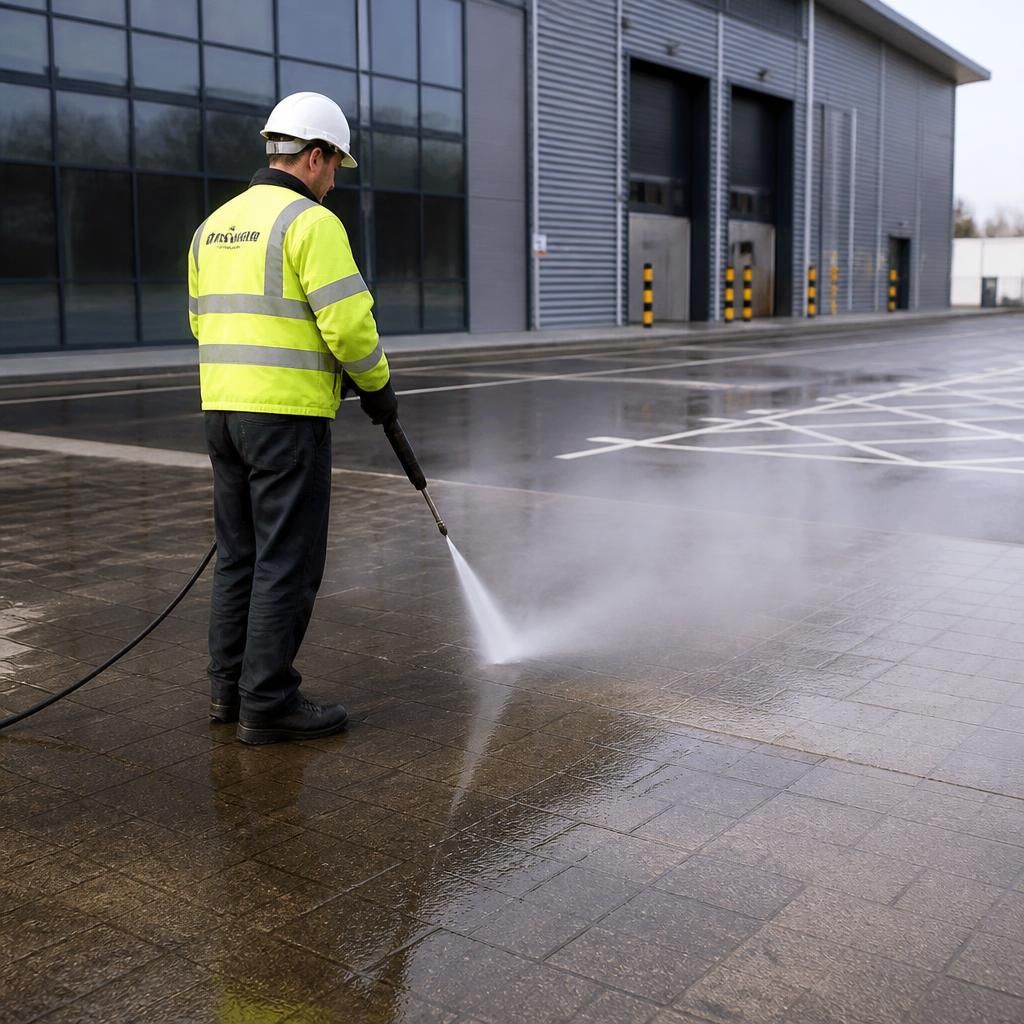
A condition-led jet washing schedule adjusts cleaning frequency to the way each commercial area is used and the contamination it receives, rather than applying the same timetable across the entire property. Entrances, loading bays, car parks and service yards usually need closer monitoring because footfall, vehicle movements, grit, oil and surface water can create soiling or slip risks more quickly than on sheltered façades.
Routine inspections help identify when cleaning is needed. Planned periodic washing can then be coordinated with quieter operating periods, while spills, graffiti, algae and construction residue should be treated promptly instead of waiting for the next scheduled visit. Reviewing surface condition after each service also helps determine whether the existing frequency is appropriate and whether drainage or another recurring source of contamination needs attention.
Discuss Your Commercial Jet Washing Schedule
Discuss your commercial jet washing schedule with Encanto Exterior Cleaning to agree a condition-led maintenance plan for your premises. We can assess your surfaces, usage patterns and contamination risks, then recommend suitable planned and reactive cleaning.