
How do commercial jet washing services compare in terms of cost and effectiveness between different surface types?
Commercial jet washing costs and effectiveness vary by surface, access, contamination and the pressure or temperature required. Hard-wearing concrete and block paving are generally the most cost-effective to clean, while façades, roofs, cladding and sensitive finishes may require lower-pressure or steam methods, specialist access equipment and more preparation.
Commercial jet washing is generally most cost-effective on robust, accessible surfaces such as concrete, tarmac and some block paving. Cost and cleaning effectiveness become less predictable on façades, cladding, roofs and delicate finishes because these areas may need lower pressure, controlled water flow, steam cleaning, chemical treatment, specialist access equipment and more detailed protection. The right comparison is therefore not simply the lowest price per square metre, but the total cost of achieving a clean result without damaging the surface or creating avoidable maintenance work.
What determines the cost of commercial jet washing?
A contractor will normally assess the surface, its condition, the type and severity of contamination, access arrangements, drainage and the required finish before pricing the work. Large open areas are usually more economical because equipment can be deployed efficiently and operatives can work continuously. Smaller or divided areas may take longer in proportion to their size if they involve obstacles, restricted access or extensive preparation.
- Surface area and layout: A clear car park is quicker to clean than a similarly sized area divided by walls, street furniture, parked vehicles or planting.
- Contamination: Loose dirt and surface dust are simpler to remove than oil, chewing gum, algae, moss, bird fouling, construction residue, rust staining or deeply embedded traffic film.
- Pressure and temperature: Higher pressure can improve productivity on durable materials, while hot water or steam may be needed for grease, gum and biological growth. These methods can require additional equipment and fuel.
- Access: Roofs and upper façades may require mobile elevating work platforms, cherry pickers, scaffolding, long-reach systems or other access arrangements. Site permits, traffic management and exclusion zones can also affect the overall price.
- Preparation and protection: Windows, doors, vents, electrical equipment, landscaping and neighbouring surfaces may need to be covered or isolated. Moving vehicles, managing pedestrians and protecting drainage routes all add time.
- Wastewater management: Water containing oil, sediment, chemicals or other contaminants may need to be collected, filtered and disposed of correctly rather than allowed to enter surface-water drainage.
Concrete and tarmac
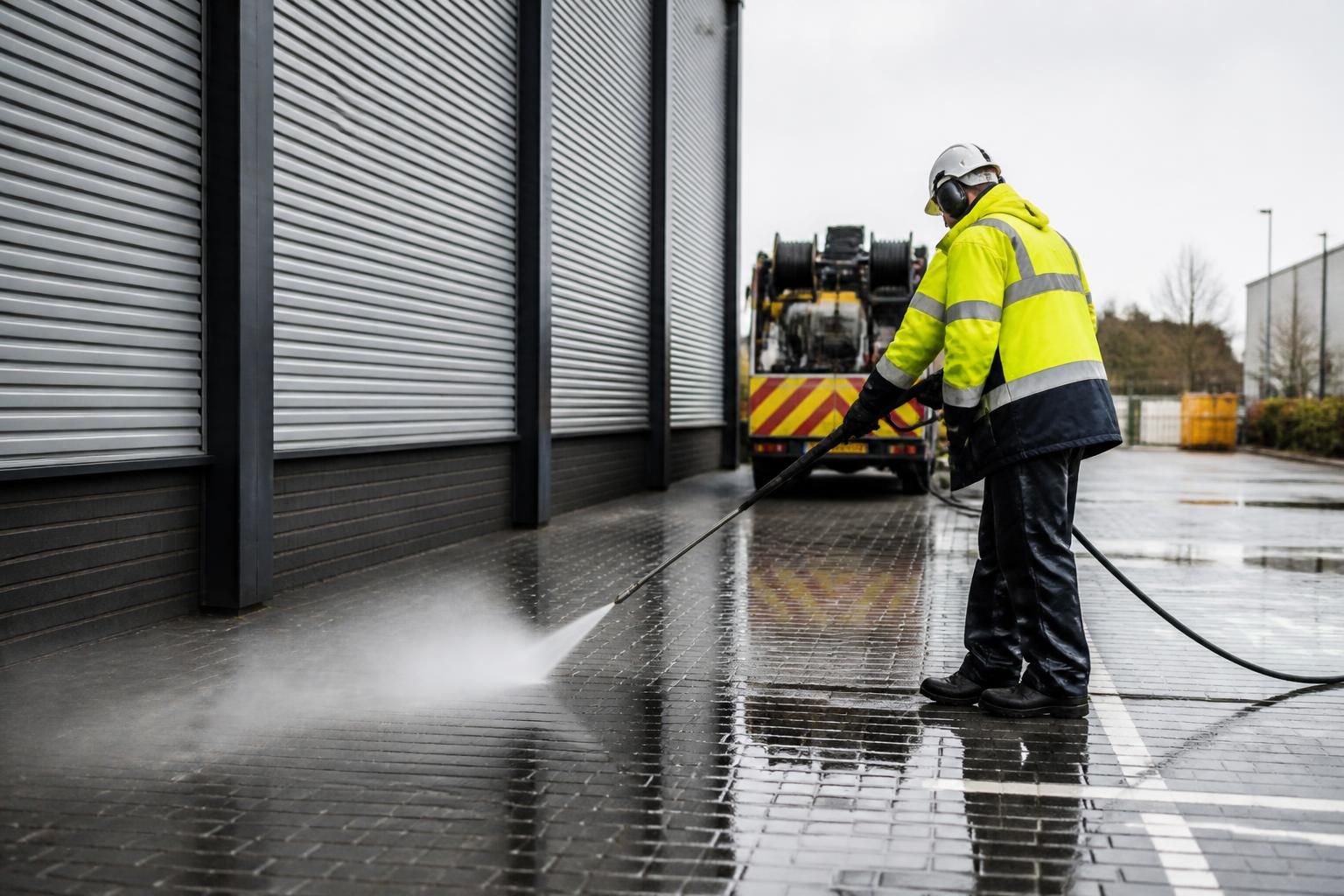
Concrete is usually one of the most straightforward surfaces for commercial jet washing. It can tolerate effective pressure levels when its condition has been checked, making the method suitable for yards, loading areas, walkways, service compounds and car parks. It is effective against general dirt, algae, tyre marks and some oil contamination, although old oil may need a degreaser, dwell time and repeated treatment rather than water pressure alone.
Tarmac is also suitable for controlled cleaning, but it is less tolerant of aggressive treatment than sound concrete. Excessive pressure or heat can disturb the surface, loosen aggregate or expose weakened areas. A competent operator will adjust the pressure, keep the lance moving and avoid concentrating the jet on cracks, edges and repairs. These surfaces often offer a good balance between cost and visible improvement because they are commonly extensive, level and accessible.
Block paving and concrete paving slabs
Block paving can respond very well to jet washing, particularly where dirt, algae and moss have accumulated in the joints and on the surface. Cleaning may expose loose or deteriorated jointing material, so re-sanding or local repairs may be required afterwards. The condition of the blocks, joint width, drainage and any previous sealant will influence both the method and the final cost.
Paving slabs are generally effective to clean, but cracked, rocking or delicate slabs need a more cautious approach. Uneven surfaces can slow the work, and stained or weathered slabs may not return to a uniform colour simply through pressure washing. A pre-clean inspection helps distinguish removable contamination from permanent wear, staining or surface damage.
Brickwork and masonry façades
Brick and masonry façades often require more skill than ground-level concrete. Jet washing can remove dirt, algae and some atmospheric staining, but excessive pressure may erode mortar joints, damage softer brick, drive water into the wall or worsen existing defects. Low-pressure washing, soft washing or steam cleaning may be more appropriate, depending on the masonry and contamination.
The cost is often higher because façades involve vertical working, windows and architectural details, protection of entrances and sometimes specialist access equipment. Effectiveness should be judged by the removal of harmful or unsightly contamination while preserving the brick, mortar and pointing. A superficially strong blast that causes substrate damage is not a successful or economical clean.
Cladding and coated metal panels
Cladding can usually be cleaned effectively, but the correct method depends on whether it is powder-coated metal, painted steel, composite panel, uPVC or another system. General dirt and traffic film may be removed with controlled pressure and a suitable detergent. Oxidation, staining around fixings, bird fouling and aged coatings may need additional treatment.
Cladding is often more expensive than open paving because the work may be at height and the surface can be vulnerable to coating failure, water ingress and streaking. Operators need to control pressure around joints, vents, seals and panel laps, and rinse consistently to prevent detergent marks. Steam or low-pressure methods can provide a safer and more even result where a strong jet would be unsuitable.
Roofs
Roof cleaning is not automatically a jet-washing job. Tiles, slate, metal roofing, membranes and coated systems have different tolerances, and the roof may already have cracked, displaced or deteriorated sections. High pressure can remove protective finishes, force water beneath tiles or damage seals. For many roofs, soft washing, low-pressure treatment or controlled steam is more appropriate than conventional jet washing.
Roof work usually costs more because of survey requirements, fall protection, access equipment, fragile-surface precautions and the need to contain moss or contaminated run-off. Cleaning can be highly effective when the method matches the roof material, but the assessment should identify whether staining is biological growth, weathering, corrosion or a defect that cleaning cannot correct.
Car parks and multi-level parking areas
Car parks are commonly cleaned with pressure or hot-water equipment, particularly where there is traffic film, tyre marking, algae, litter residue or oil contamination. Open-air car parks may be relatively efficient to clean, while multi-storey facilities can require more planning because of ventilation, drainage, low headroom, pedestrian movements, parked vehicles and restricted water recovery.
Hot water and appropriate degreasers can improve results on oil and grease, but the wastewater must be managed responsibly. A lower-cost cold-water clean may remove general dirt while leaving embedded hydrocarbons behind, so the specification should state whether the objective is visual improvement, slip-risk reduction, stain treatment or a full maintenance clean.
Graffiti and localised contamination
Graffiti removal is normally priced by the affected area and the substrate rather than by the size of the whole building. Smooth, durable surfaces may respond well to pressure washing with a suitable removal product. Brick, stone, painted walls and porous masonry may need steam, specialist chemicals or repeated treatment to reduce ghosting without spreading the paint or damaging the substrate.
Chewing gum, bird fouling and isolated grease deposits can also require hot water, steam or spot treatment. These methods may have a higher equipment cost than a basic cold-water wash, but they are usually more effective and can avoid unnecessary cleaning of unaffected areas.
How effectiveness should be compared
Effectiveness is not measured solely by how quickly a surface looks cleaner. A suitable service should remove the specified contamination, leave an even finish, avoid substrate damage, manage wastewater properly and provide a result that remains presentable under normal use. The method should also address the cause where possible, such as blocked drainage, persistent shade, organic growth or recurring oil leaks.
- Concrete and sound paving: Usually highly effective with controlled pressure, with hot water or detergent for grease and stubborn marks.
- Tarmac: Effective for surface dirt and biological growth when pressure and heat are controlled.
- Brick and masonry: Effective with carefully selected low-pressure, soft-wash or steam techniques; aggressive jetting carries greater risk.
- Cladding: Effective when pressure, detergent and rinsing are matched to the coating and panel construction.
- Roofs: Effective only when the roof material, condition, access and contamination support the selected low-impact method.
- Oil, gum and heavy residues: Often require hot water, steam, degreasing or spot treatment rather than cold-water pressure alone.
Choosing the most economical approach
For a reliable comparison, request a specification that identifies the surfaces, proposed method, preparation, access equipment, wastewater controls, protection measures and expected finish. Ask whether re-sanding, sealing, stain treatment or follow-up work is included where relevant. A method statement and site assessment are particularly important for roofs, façades, occupied premises and areas used by vehicles or the public.
In practical terms, standard jet washing is usually the economical choice for large, durable and accessible surfaces. Specialist low-pressure, steam or hot-water cleaning can cost more initially, but it may be better value for sensitive materials, difficult contamination and high-level work because it reduces the risk of damage and repeat cleaning. The best commercial solution matches the cleaning method to the surface rather than applying the same pressure setting across the entire site.
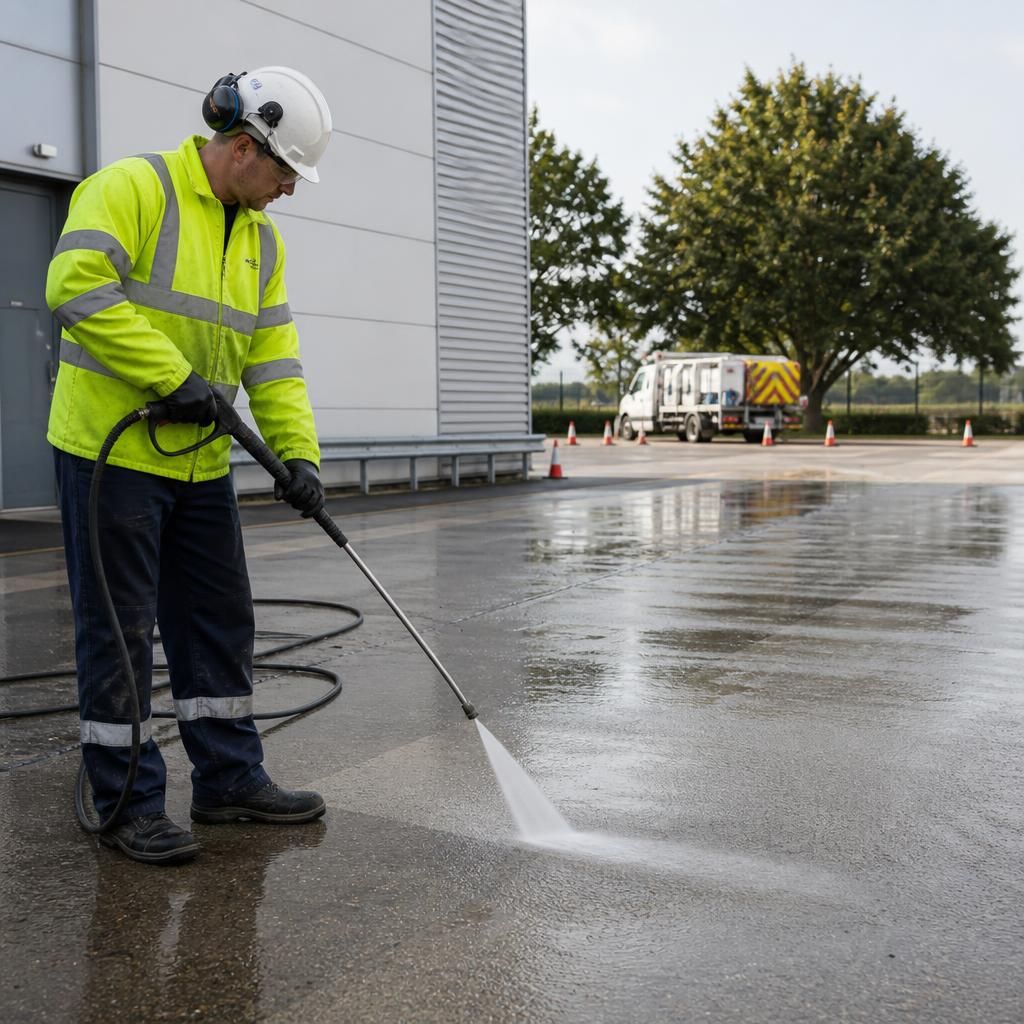
Commercial jet washing is usually most cost-effective on large, robust and accessible surfaces such as sound concrete, tarmac and block paving. These materials can often be cleaned efficiently with controlled pressure, whereas façades, cladding and roofs may require low-pressure washing, steam cleaning, specialist detergents or access equipment to achieve a safe result.
A lower initial price is not always the best value. The quotation should account for surface protection, preparation, contamination treatment and wastewater control. Using the correct method can prevent damage to coatings, mortar, joints or roof finishes, reducing the likelihood of remedial work and repeat cleaning.
Request a surface-specific commercial jet washing assessment
Request a surface-specific commercial jet washing assessment from Encanto Exterior Cleaning to compare the most suitable cleaning method, access requirements and wastewater controls for your site. We can provide a clear quotation based on the surfaces, contamination and finish required.