
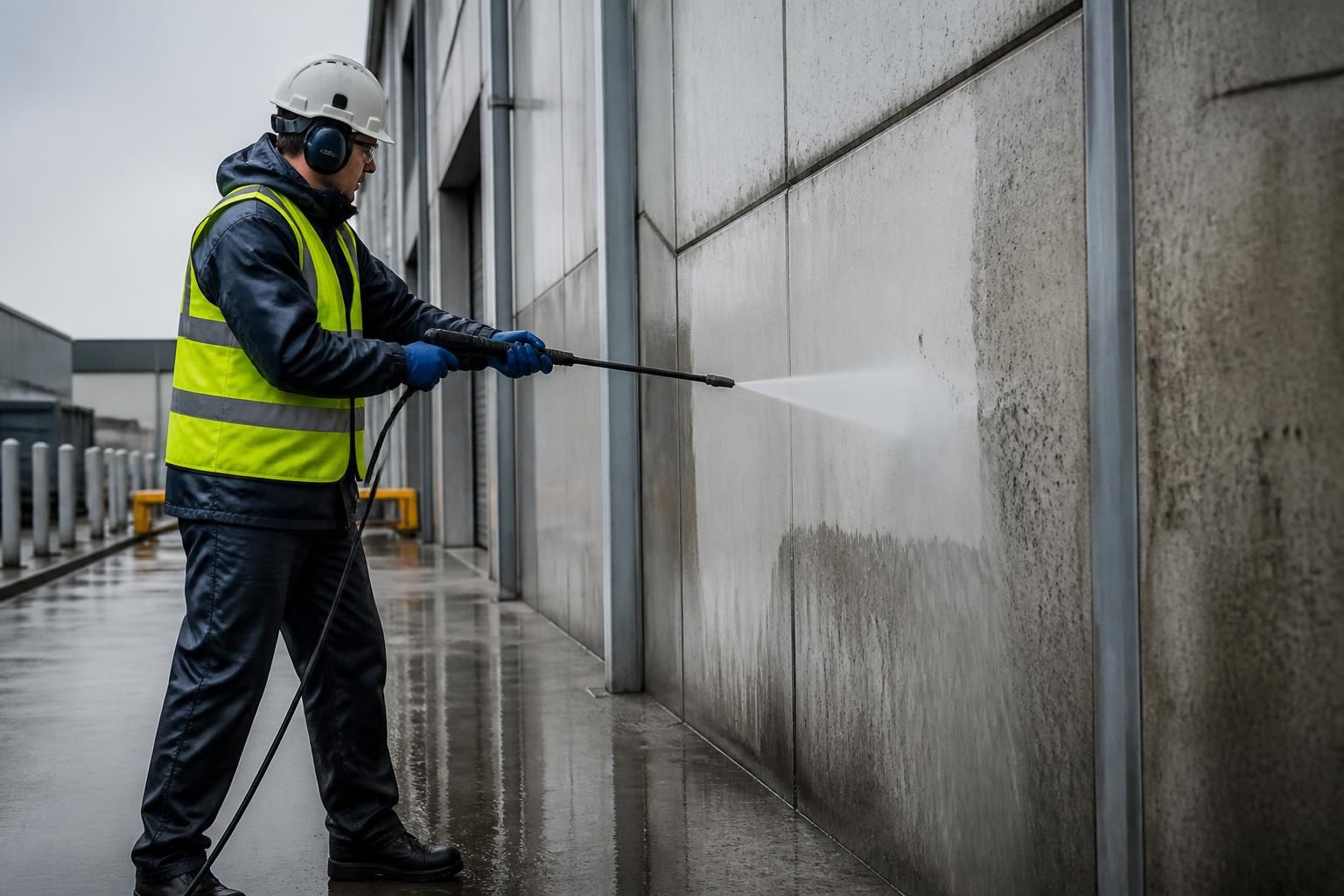
Can commercial jet washing be used on all types of surfaces?
No, commercial jet washing is not suitable for every surface. It works well on durable materials such as concrete, brick, paving and some cladding, but delicate surfaces including certain renders, old masonry, timber, glass and damaged coatings may require lower pressure, steam cleaning or another specialist method to prevent damage.
Commercial jet washing is not suitable for every surface. It is generally effective on robust, water-resistant materials such as concrete, asphalt, paving, engineering brick and some types of cladding, but high-pressure water can damage fragile, aged, porous or poorly bonded surfaces. The correct approach depends on the material, its condition, the type of contamination and the pressure, temperature and cleaning solution required.
Surfaces commonly suitable for jet washing
- Concrete: Sound concrete can usually tolerate pressure washing for removing dirt, algae, oil residues, tyre marks and general atmospheric soiling. Care is needed around cracks, joints, exposed aggregate and areas where the surface has started to break down.
- Asphalt and tarmac: These surfaces can often be cleaned using controlled pressure and appropriate techniques. Excessive pressure may loosen aggregate, disturb edges or worsen existing deterioration.
- Block paving and concrete paving: Jet washing can remove moss, weeds, soil and surface deposits. The condition of the joints should be checked first, as aggressive cleaning may remove jointing material. Re-sanding or other remedial work may be needed afterwards.
- Engineering brick and sound masonry: Durable brickwork may be suitable, particularly where the contamination is firmly established. The mortar, brick hardness and age of the building must be assessed before cleaning.
- Some metal and composite cladding: Coated steel, aluminium and certain composite panels can be cleaned when the coating is intact and the manufacturer’s requirements are followed. Joints, seals, fixings and drainage details require particular care.
Surfaces that need caution or an alternative method
- Rendered façades: Modern, sound render may sometimes be cleaned at low pressure, but cracked, hollow, friable or poorly bonded render can be marked, eroded or dislodged by jet washing.
- Old or soft brickwork: Historic and porous bricks can absorb water and may have weakened faces or fragile mortar. High pressure can cause surface loss, known as spalling, and may drive water into the building fabric.
- Natural stone: The suitability varies considerably between granite, sandstone, limestone and other stones. Soft or porous stone may require low-pressure cleaning, steam cleaning or a specialist conservation method rather than conventional jet washing.
- Timber: Pressure washing can strip protective coatings, raise the grain, cause splintering and force water into joints. Timber façades, decking and fencing are normally better treated with a controlled, lower-pressure process where cleaning is appropriate.
- Glass and glazed surfaces: Glass itself may withstand water, but seals, frames, films, coatings and adjacent components can be damaged by excessive pressure. Contaminants such as cement or paint may also require specialist removal rather than direct jetting.
- Painted, powder-coated or otherwise coated surfaces: Cleaning may remove a weak or deteriorated coating. A test area is essential where the finish is aged, flaking, chalking or already compromised.
- Roofing materials: Concrete tiles may tolerate carefully controlled cleaning, while slate, fragile tiles, coated systems and some sheet materials can be damaged by high pressure. Roof cleaning also requires safe access and control of water runoff.
The condition of the surface is as important as the material. A sound concrete yard and a cracked concrete yard may need different settings and techniques. Before work begins, the surface should be checked for cracks, loose sections, failed joints, corrosion, flaking coatings, open seams, damaged drainage points and signs of water ingress. Previous repairs and sealants can also react differently to pressure or cleaning chemicals.
Jet washing is also not always the best response to the contamination. Oil, chewing gum, graffiti, bird fouling, moss, algae, cement residue and general traffic film each require different treatment. Hot water or steam can improve the removal of greasy deposits and biological growth while allowing lower pressure. A controlled detergent or specialist treatment may be more appropriate for sensitive materials, provided it is compatible with the surface and managed in line with environmental requirements.
A professional surface assessment should establish:
- what the surface is made from and whether it has a coating or sealant;
- how old, porous, weathered or structurally sound the material is;
- which areas are loose, cracked, hollow, corroded or already damaged;
- the pressure, temperature, nozzle and working distance that can be used safely;
- whether detergents, biocides, steam or soft washing would be more suitable;
- where water will drain and how contaminated runoff will be contained;
- whether nearby doors, vents, electrical equipment, vehicles and pedestrian routes need protection.
A small test clean in an inconspicuous area is an important part of the process. It shows whether the selected method removes the contamination without etching, discolouring, exposing aggregate, lifting a coating or changing the appearance of the surrounding surface. The test area should be allowed to dry where possible, as some damage or colour variation is more apparent after drying.
Pressure should not be treated as the only measure of cleaning performance. The result depends on the combination of water pressure, flow, temperature, nozzle type, distance, dwell time and cleaning agent. Using the lowest effective pressure generally reduces the risk of damage, but simply lowering pressure without changing the method may not remove the contamination effectively. Experienced operatives select the process for the surface rather than applying the same setting across an entire site.
Commercial sites also require attention to surrounding property and safe operation. Jet washing can drive water beneath cladding, doors or roof details, disturb loose debris and create slippery areas. Electrical installations, air intakes, loading bays, finished façades and occupied entrances may need isolation or shielding. Runoff containing silt, oil, detergent or biological residue must be controlled and disposed of responsibly rather than allowed to enter unsuitable drainage systems.
For properties in Birmingham, the West Midlands and elsewhere in the UK, the practical conclusion is that robust external hard surfaces are often suitable for commercial jet washing, while sensitive, historic, coated or damaged surfaces require a tailored method. Where high-pressure cleaning presents a risk, steam cleaning, soft washing, low-pressure rinsing, manual treatment or another specialist process may provide a safer result. The cleaning method should be agreed only after inspecting the surface and testing the proposed technique.
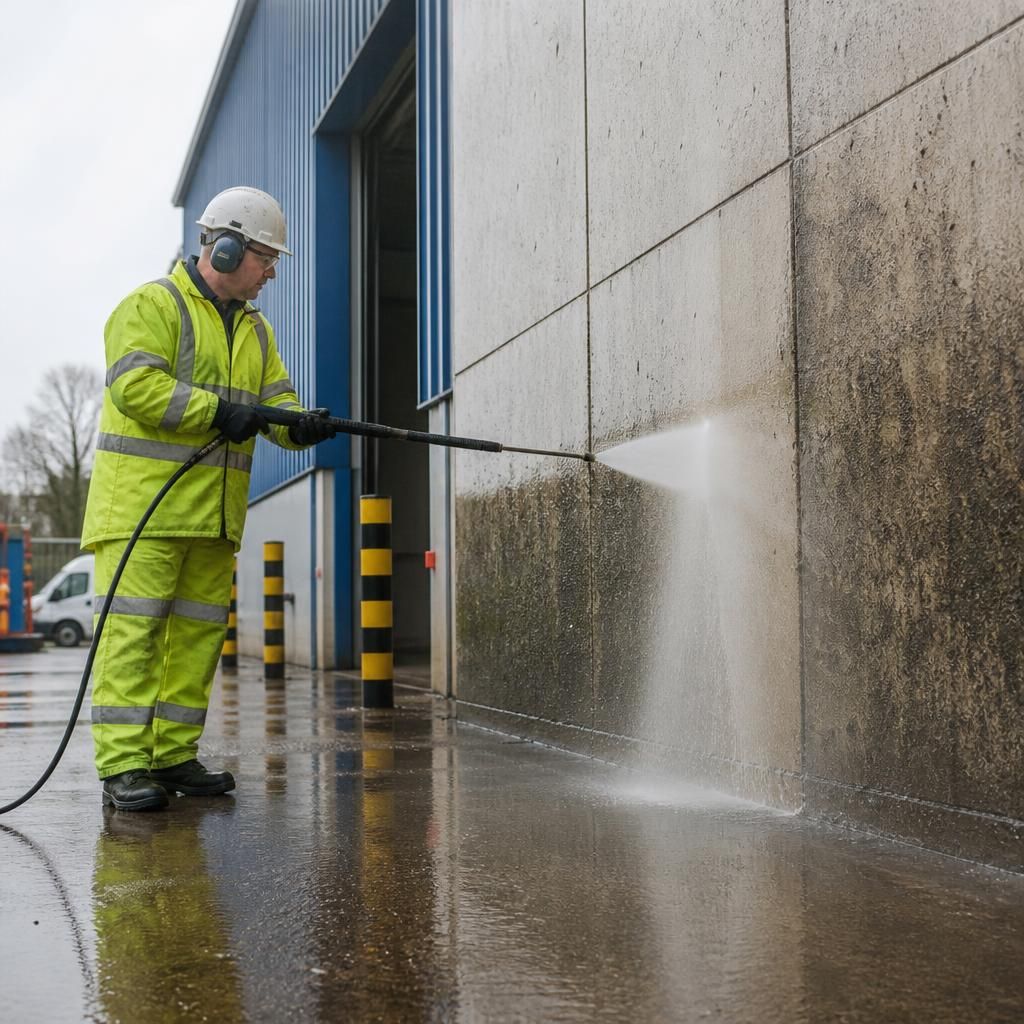
Commercial jet washing is suitable only when the surface can withstand the selected pressure, water temperature and cleaning method. A sound concrete yard may tolerate controlled jet washing, whereas weathered render, soft brick, timber or a damaged coating may require low-pressure rinsing, steam cleaning or another specialist process.
A small test area should be cleaned before the main work begins. This checks whether the method causes etching, colour change, surface loss, coating failure or damage to joints and seals. The result should be assessed after drying, then the equipment settings and cleaning treatment can be adjusted to achieve a safe, consistent finish.