
What surfaces are suitable for façade and cladding jet washing?
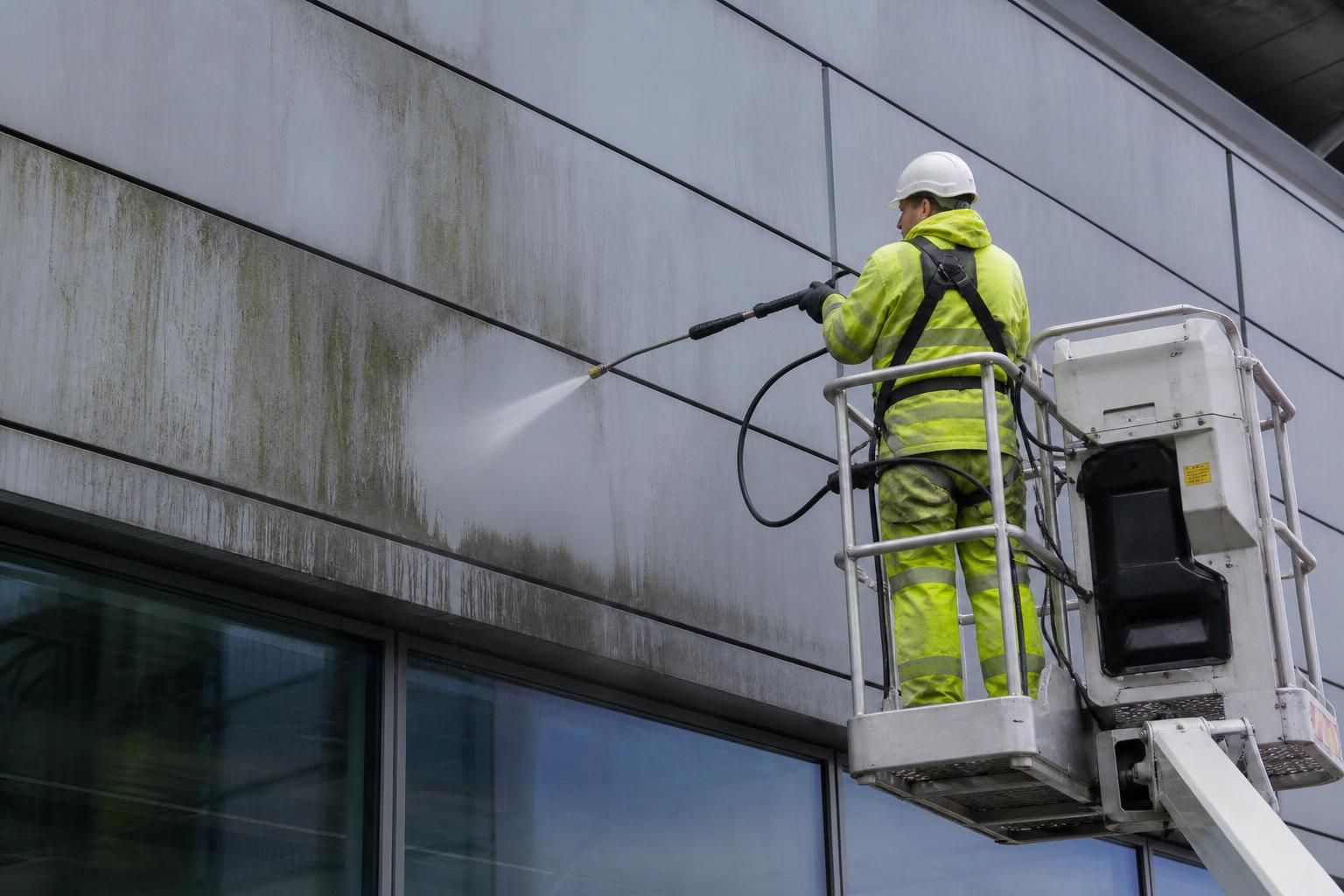
Façade and cladding jet washing is generally suitable for robust surfaces such as brickwork, concrete, stone, powder-coated metal, coated steel and some uPVC cladding, provided the pressure, temperature and cleaning solution are matched to the material. Delicate, weathered, painted, timber, render and composite surfaces may require low-pressure or soft washing instead, so the surface condition and existing coatings should be assessed before cleaning.
Façade and cladding jet washing is generally suitable for sound, robust surfaces such as brickwork, concrete, some natural stone, powder-coated metal, coated steel and certain uPVC cladding. The correct method depends on the material, its condition, the strength of its coatings, and the type of contamination. Pressure, water temperature, nozzle selection and cleaning chemicals must be adjusted to avoid removing finishes, opening joints or driving water behind the façade.
Surfaces commonly suitable for controlled jet washing
- Brickwork: Sound, dense brick can usually be cleaned with carefully controlled pressure to remove traffic film, atmospheric soiling, algae and loose dirt. Older, soft or handmade bricks may require a gentler approach because aggressive washing can erode the face of the brick and damage mortar joints.
- Concrete: Concrete façades, columns, retaining structures and precast panels are often suitable for pressure washing. The operator should first check for cracks, exposed aggregate, failing repairs and areas where water could enter the structure.
- Natural stone: Dense stone such as granite and some types of slate may tolerate controlled jet washing. Softer or more porous stone, including certain limestones and sandstones, can be marked, eroded or saturated by excessive pressure. Steam cleaning or a low-pressure method is often more appropriate for sensitive stone.
- Powder-coated and coated metal: Aluminium panels, steel cladding and other coated metal surfaces can generally be washed when the coating is intact. Damaged, chalking, peeling or corroded finishes need a condition assessment before cleaning.
- uPVC cladding: Good-condition uPVC can usually be cleaned using moderate pressure and a suitable detergent. The nozzle should not be held close to the surface, as concentrated jets can mark the finish, force water behind joints or damage seals.
- Some profiled and insulated cladding systems: Composite panels, insulated panels and coated profiled sheets may be suitable, but the manufacturer’s cleaning guidance and the condition of the coating should be considered. Joints, laps, fixings and vulnerable edge details require particular care.
Surfaces requiring a lower-pressure or alternative method
- Painted façades and cladding: Jet washing can lift, feather or strip a weak paint film. If the coating is sound, a low-pressure wash may be possible; if it is flaking or powdery, cleaning should be planned alongside preparation and redecoration.
- Render and textured coatings: Render can be damaged by high pressure, especially around cracks, repairs, edges and window reveals. Soft washing, steam cleaning or a carefully controlled low-pressure clean is often safer.
- Timber cladding: High-pressure water can raise the grain, damage protective coatings and force moisture into boards and joints. Timber normally requires a low-pressure method with suitable treatment afterwards where necessary.
- Composite and decorative panels: Some resin-based, laminated or decorative finishes are vulnerable to scratching, fading, delamination or chemical attack. A small test area and product-specific guidance are important.
- Glass, seals and glazed systems: Glass itself may tolerate water cleaning, but concentrated jets can damage seals, gaskets, vents and surrounding joints. Glazed façades should normally be cleaned with a method designed for the complete system rather than treated like masonry.
- Weathered or friable surfaces: Any material that is cracked, delaminated, porous, loose or already losing its finish may deteriorate further under jet washing. The cleaning method should be changed or remedial work completed first.
Surface condition is as important as surface type
Two façades made from the same material can require completely different cleaning methods. A new, intact powder-coated panel may tolerate controlled pressure, while an older panel with chalking, corrosion and failed sealant may need gentle cleaning and repairs. Before work begins, the surface should be inspected for cracks, open joints, loose coatings, staining caused by rust or water ingress, damaged fixings, biological growth and previous cleaning marks.
Existing coatings should also be checked for lead-based or otherwise hazardous residues where relevant, particularly on older painted buildings. Suspected asbestos-containing materials must not be jet washed without appropriate identification, risk assessment and legally compliant controls. Disturbing such materials can create a serious health and environmental hazard.
How the cleaning method is selected
A professional assessment should establish the façade material, the construction details, the contamination and the condition of the finish. A test clean in an inconspicuous area can then confirm whether the selected pressure, temperature, nozzle distance and detergent are suitable. The test should be assessed after the surface has dried, as some damage or colour variation is not immediately visible when wet.
Pressure should be kept as low as practical while still removing the contamination. A wider fan nozzle and a suitable working distance generally distribute the water more safely than a concentrated jet. Chemicals may be used to loosen algae, grease, carbon deposits or other staining, but they must be compatible with the surface and thoroughly rinsed or recovered where required. Steam cleaning can provide an effective alternative for delicate materials because it uses heat and controlled water flow rather than relying solely on high impact.
Care is also needed around windows, doors, vents, electrical equipment, expansion joints, sealant lines, roof edges and drainage details. Water should not be directed into openings or behind panels. Run-off containing dirt, detergents, paint residues or biological contaminants must be controlled and disposed of in accordance with the site’s drainage and environmental requirements.
For most commercial buildings, the safest conclusion is not simply that a surface is or is not suitable for jet washing. Robust, intact materials can often be cleaned effectively, while delicate, coated or deteriorated surfaces may need low-pressure washing, steam cleaning or soft washing. A pre-clean inspection and test area will identify the appropriate method and help protect the façade, cladding system and surrounding property.
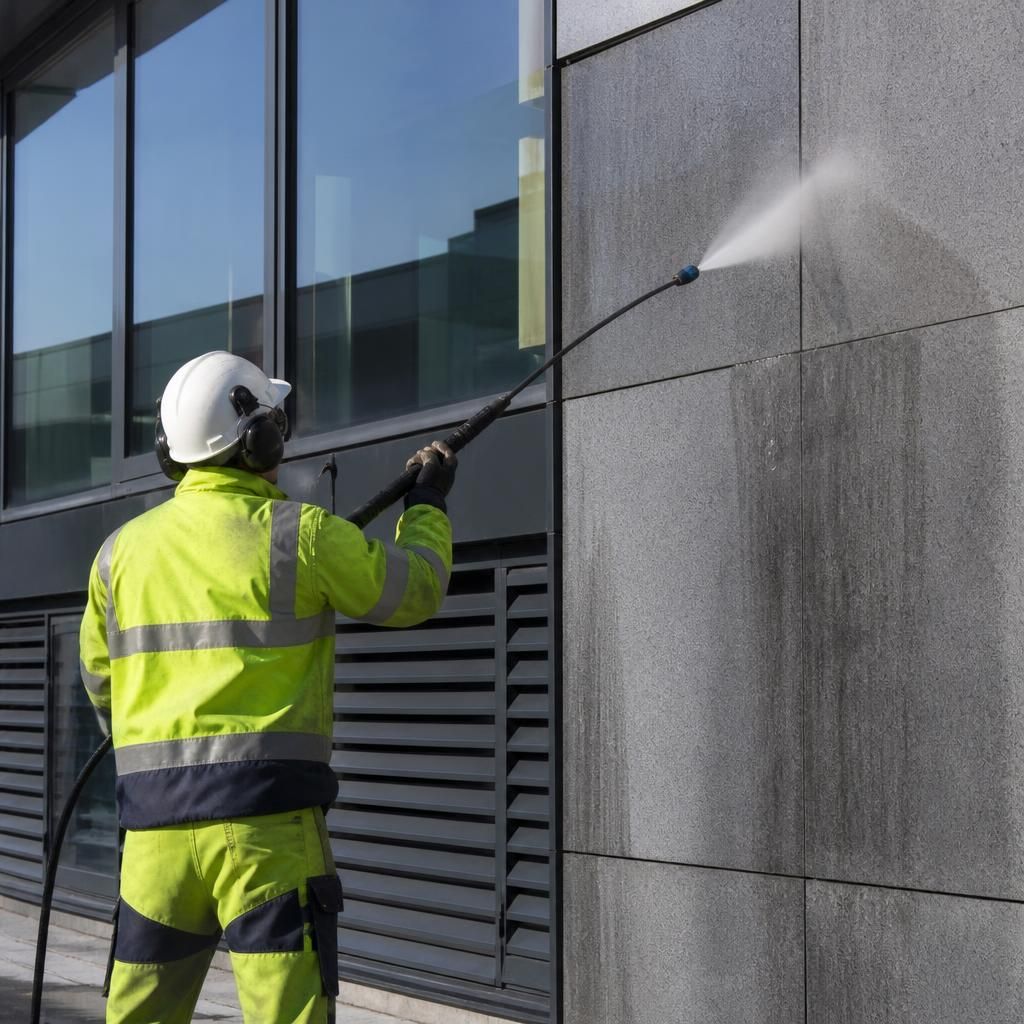
Façade and cladding jet washing is suitable only when the material and its condition can withstand controlled water pressure. Sound brickwork, concrete, coated metal and some uPVC can often be cleaned effectively, while weathered stone, render, timber, painted finishes and composite panels may require low-pressure washing or steam cleaning.
A professional assessment should check for cracks, loose coatings, open joints, failed sealant, corrosion and previous surface damage. A small test area should then be cleaned and inspected after drying. This confirms that the pressure, nozzle distance, temperature and cleaning solution will remove the contamination without marking the finish or forcing water behind the cladding.