
What is the expected cost range for façade and cladding jet washing, and what factors influence these prices?
Façade and cladding jet washing is usually priced by quotation rather than a fixed rate, because commercial projects vary significantly in size, access and cleaning requirements. The main cost influences are the surface area and material, level of soiling, access equipment, water recovery, traffic management, environmental controls and whether one-off or planned maintenance is required.
The cost of façade and cladding jet washing in the UK is normally provided by quotation rather than a standard price list. A small, accessible and lightly soiled elevation may be suitable for a relatively straightforward cleaning visit, while a large commercial building requiring access equipment, water recovery, traffic management or specialist treatment can become a substantial multi-day project. A reliable price range can only be established after assessing the building, its materials, access and environmental requirements.
For commercial work, contractors may calculate the price using a combination of surface area, labour time, equipment requirements and project-specific controls. A simple price per square metre can be useful for initial comparison, but it does not always reflect the real cost of cleaning a complex building. Two façades with similar areas can require very different methods and levels of preparation.
The main factors influencing the price are:
- Surface area and layout: Larger elevations generally require more labour, water, equipment time and site coordination. Multiple façades, recessed areas, canopies, service yards and awkward sections increase the working time compared with one continuous elevation.
- Cladding and façade material: Brick, concrete, render, stone, metal panels, powder-coated finishes, composite cladding and coated surfaces each require an appropriate pressure level, nozzle selection and cleaning solution. Delicate or weathered materials may need low-pressure washing, steam cleaning or manual treatment rather than aggressive jetting.
- Level and type of soiling: Light dust and loose surface dirt are generally quicker to remove than traffic film, algae, moss, bird fouling, oil deposits, cement residue, oxidation or ingrained carbon staining. Some contaminants need pre-treatment, agitation or more than one cleaning pass.
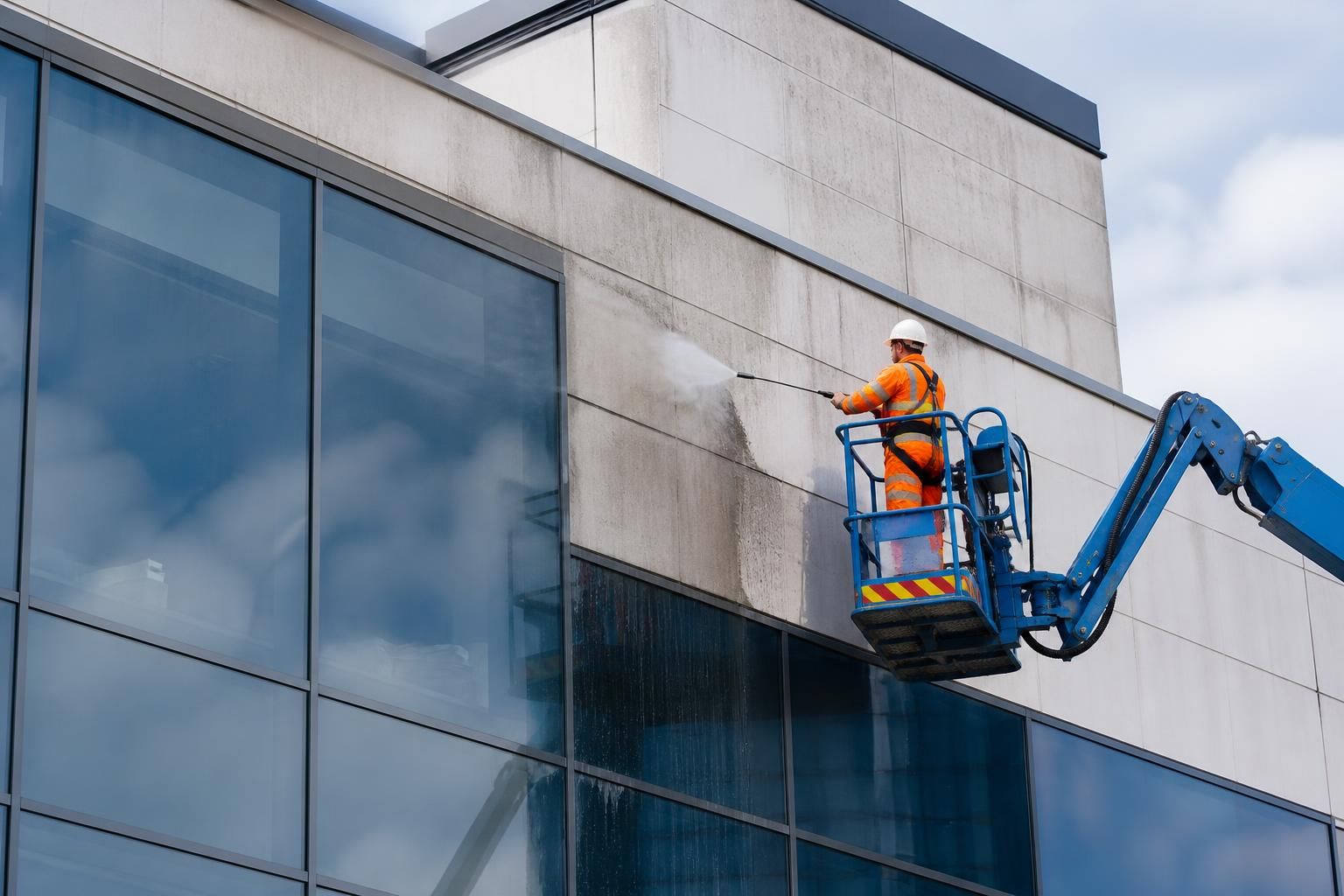
- Building height and access: Ground-level work is usually less complex than cleaning upper storeys, rooflines, atria or elevations obstructed by plant and other structures. Mobile elevated work platforms, tower systems, scaffolding, rope access or long-reach equipment can all affect the quotation.
- Site access and logistics: Restricted entrances, limited parking, remote water supplies, long hose runs, busy service yards and occupied premises can extend the programme. Equipment delivery, setup and removal may also need to be included.
- Water supply and recovery: Some sites have a suitable external water supply, while others require water bowsers or specialist equipment. Where dirty water, cleaning chemicals or contaminated run-off cannot enter surface drains, recovery, filtration, storage and lawful disposal add to the project cost.
- Traffic and pedestrian management: Cleaning beside public footways, entrances, roads or active loading areas may require barriers, signage, banksmen, temporary closures or coordinated working hours. These controls are important for safety but increase planning and labour requirements.
- Preparation and remedial work: Masking sensitive areas, protecting windows and doors, removing loose material, treating biological growth and carrying out test patches all take time. Repairs, sealant failure, damaged coatings or deteriorated substrate should be dealt with separately rather than concealed by cleaning.
- Cleaning method: Conventional pressure washing may be appropriate for robust surfaces, whereas steam cleaning, soft washing, chemical treatment or a combination of methods may be needed for sensitive finishes and stubborn deposits. Specialist methods can require additional equipment, training and controlled rinsing.
- Programme and frequency: One-off restoration cleaning can involve heavier soiling and more preparation. Planned maintenance may reduce the cost of each visit because contamination is controlled before it becomes deeply embedded, and access or equipment can sometimes be scheduled more efficiently.
- Location and working conditions: Travel, parking restrictions, regional disposal requirements and the availability of local equipment can affect the final quotation. Night work, weekend work and restricted operating hours may also increase labour costs.
Typical commercial pricing approaches
Quotes are commonly presented as a total project price, a rate based on measured area, a daily or hourly labour-and-equipment rate, or a combination of these. Area-based pricing is most useful where the façade is accessible and the cleaning specification is consistent. A total project price is often clearer for larger sites because it can include access, preparation, cleaning, rinsing, wastewater controls and completion checks in one figure.
Be cautious when comparing quotations based only on the lowest rate per square metre. A lower figure may exclude access equipment, water, chemical treatment, run-off management, traffic control, testing or the cleaning of difficult sections. Ask each contractor to state exactly what is included and whether the price is subject to a site survey.
Items that should be clear in a quotation include:
- the elevations, cladding types and approximate areas included;
- the proposed cleaning method and any pre-treatment;
- the access system and whether setup, relocation and removal are included;
- protection for windows, doors, signage, landscaping and nearby equipment;
- water supply, chemical use and wastewater recovery or disposal;
- traffic, pedestrian and exclusion-zone arrangements;
- testing or sample panels before full cleaning;
- the expected programme and working hours;
- any exclusions, such as repairs, paint removal, sealant replacement or scaffold hire; and
- whether VAT, parking, permits and out-of-hours working are included.
How to obtain a more accurate price
- Provide photographs, drawings or elevations where available, together with the building location and approximate dimensions.
- Identify the façade and cladding materials, known coatings and areas of previous repair.
- Describe the visible contamination and explain whether there are oil, chemical, bird fouling, graffiti or biological growth concerns.
- State any access restrictions, site rules, operating hours, tenant requirements or planned closures.
- Confirm whether wastewater can be discharged to the drainage system or must be collected and removed.
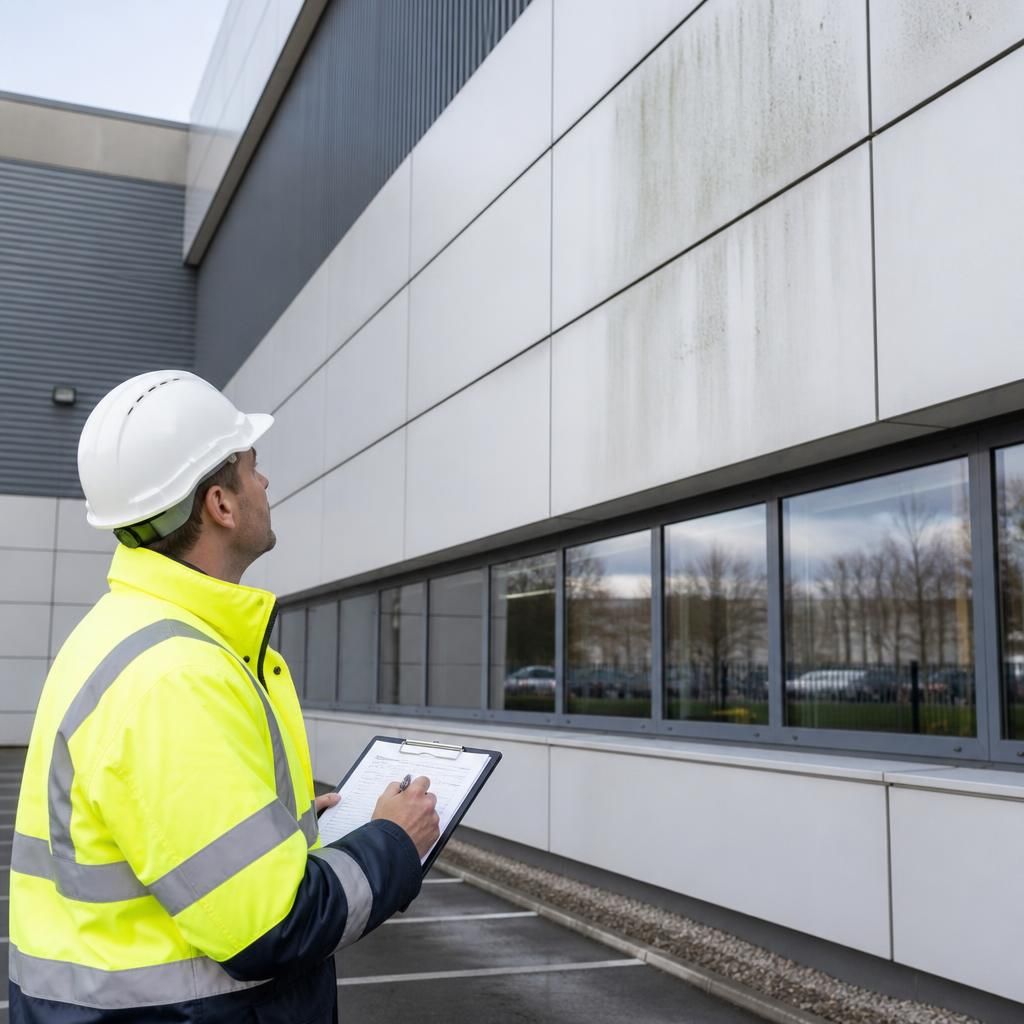
- Request a site survey and test clean before agreeing a full specification, particularly where the surface is aged, coated or sensitive.
A site survey is important because pressure washing can expose failed coatings, loose panels, cracked render, defective pointing or water ingress that was not visible beforehand. The quotation should identify these risks and explain whether cleaning will proceed only after the relevant repairs have been completed.
For budgeting purposes, it is useful to separate the anticipated cleaning cost from optional or conditional items such as specialist access, extensive stain removal, repairs, wastewater disposal and out-of-hours working. This produces a clearer comparison between quotations and helps prevent unexpected additions during the project.
The most suitable quote is not necessarily the cheapest. It should demonstrate that the contractor has understood the façade materials, selected a safe cleaning method, allowed for access and environmental controls, and defined the finished standard. A detailed specification and a written site assessment provide a more dependable basis for cost control than an unqualified headline rate.
The most reliable way to compare façade and cladding jet washing costs is to check what each quotation includes, rather than comparing the headline rate alone. A complete commercial cleaning quotation should reflect the building’s materials, surface condition, access requirements, cleaning method and any controls needed to manage water, chemicals, pedestrians and traffic.
Ask the contractor to confirm whether the price includes:
- site setup, access equipment and movement between elevations;
- surface preparation, test patches and protection for windows, doors, signage and landscaping;
- water supply, cleaning products, rinsing and wastewater recovery or disposal;
- traffic management, barriers and out-of-hours working where required; and
- any exclusions, such as repairs, scaffold hire, paint removal or sealant replacement.
A site survey is particularly important for aged, coated or damaged cladding. It can identify loose panels, failed coatings, defective pointing or water ingress before cleaning begins, helping separate necessary repairs from the cleaning budget and reducing the risk of unexpected costs.
Request a Detailed Façade and Cladding Jet Washing Quote
Request a detailed façade and cladding jet washing quote based on your building’s materials, condition, access requirements and wastewater controls. Provide site details or arrange a survey so the scope, inclusions and any optional costs can be assessed accurately.