
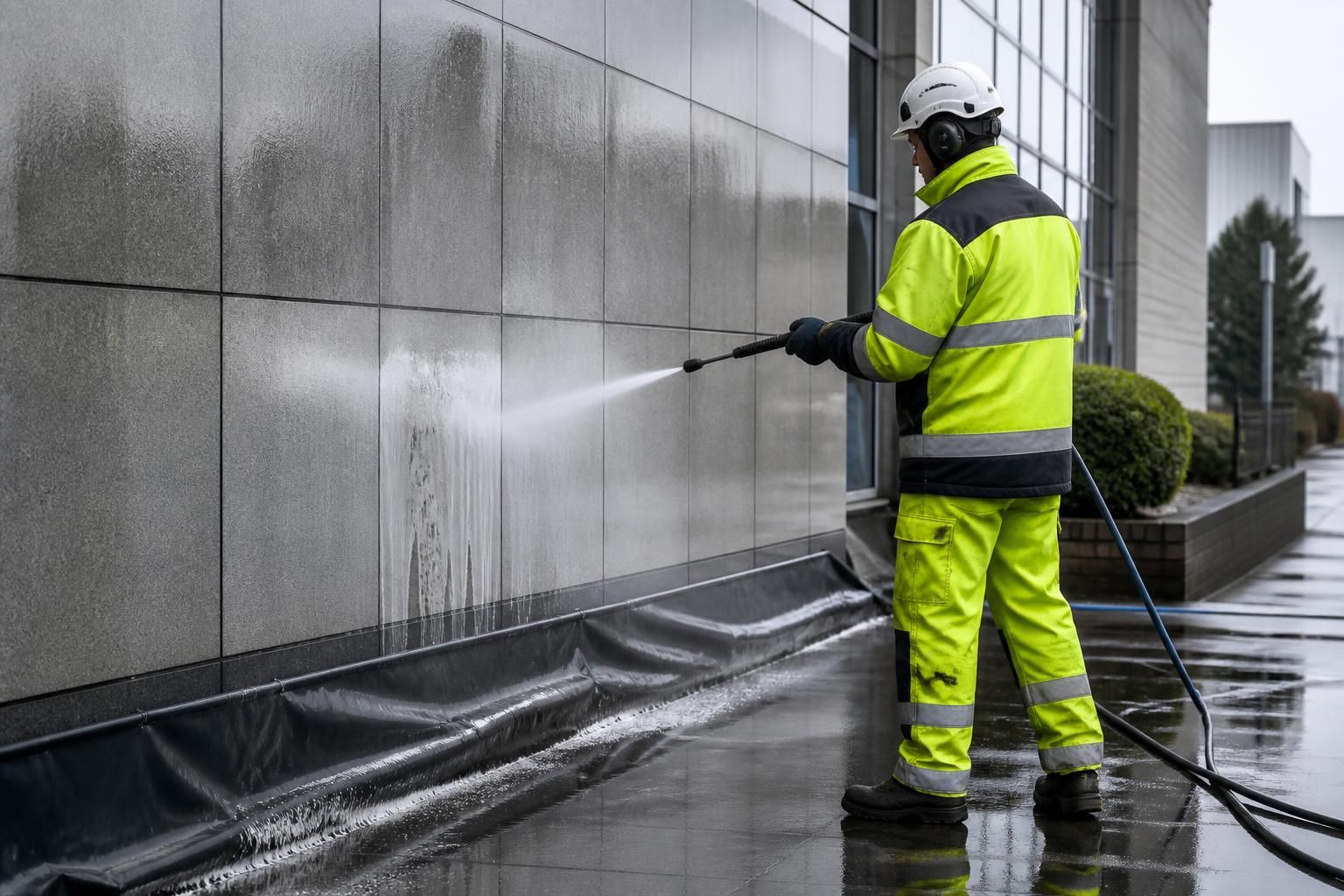
What environmental considerations should be taken into account when choosing façade and cladding jet washing services?
Choose a façade and cladding jet washing service that controls water use, prevents contaminated runoff entering drains or watercourses, selects effective low-impact cleaning methods and disposes of wastewater responsibly. The contractor should also assess chemical use, protect surrounding soil and vegetation, and use suitable equipment and access methods to minimise noise, emissions and unnecessary repeat cleaning.
When choosing façade and cladding jet washing services, assess how the contractor will control water use, prevent polluted runoff, select cleaning chemicals and manage wastewater. A responsible service should also consider the building materials, nearby drains and watercourses, vegetation, noise, equipment emissions, access methods and the disposal of contaminated materials.
Wastewater and runoff control
Jet washing removes more than surface dirt. Runoff may contain dust, oils, traffic film, paint particles, algae, heavy metals or residues from previous treatments. It should not be allowed to enter surface-water drains, soil or watercourses without appropriate controls. Before work begins, the contractor should identify drainage routes and determine whether the wastewater needs to be contained, filtered, collected or removed from site.
Suitable controls can include drain covers, bunding, temporary barriers, wet vacuums, collection tanks, filtration and controlled discharge. The correct approach depends on the building’s location, the type of contamination and the local drainage system. Where wastewater may enter a foul sewer, trade effluent requirements or the sewerage provider’s consent may apply. A reputable contractor should explain the proposed discharge route rather than simply washing dirty water into the nearest drain.
Water consumption
Water use should be proportionate to the cleaning requirement. A contractor should inspect the façade or cladding first and use the lowest practical flow and pressure that will remove the contamination without damaging the substrate. Controlled rinsing, targeted application and water-recovery equipment can reduce waste, particularly on large façades, car parks and industrial buildings.
Water-efficient methods do not necessarily mean using pressure alone. Steam cleaning, soft washing, low-pressure chemical treatment or dry removal may be more suitable for particular deposits and materials. The method should be selected according to the surface, rather than applying the same pressure and volume of water across the whole building.
Chemical selection and application
Ask which detergents, biocides, degreasers or other treatments will be used, why they are necessary and how they will be controlled. Chemicals should be suitable for the façade or cladding material and applied at the lowest effective concentration. Overuse can discolour coatings, damage sealants, affect vegetation and create a more difficult wastewater stream.
The contractor should provide relevant safety and product information where requested, follow the manufacturer’s instructions and prevent chemicals from spreading beyond the treatment area. Sensitive planting, soil, water features, ventilation openings and neighbouring surfaces may need protection. Chemical treatments should not be used as a substitute for proper rinsing and wastewater management.
Protection of surrounding land and water
Environmental planning should include more than the façade itself. The work area may be close to planted borders, trees, ponds, rivers, streams, public footways or neighbouring properties. The contractor should identify these risks during the site survey and use suitable sheeting, barriers, drain protection and collection equipment.
Birds, bats and other wildlife can also be relevant, particularly where façades, roofs or cladding contain nests, roosting spaces or established vegetation. If a protected species or active nest could be affected, work may need to be adapted, postponed or assessed by a suitably qualified person. Pressure washing should never dislodge nesting material or wash contaminants into habitats.
Noise, dust and local disturbance
Petrol-powered pressure washers, generators, access equipment and surface preparation tools can create noise and exhaust emissions. The contractor should select equipment appropriate to the scale of the work and consider quieter electric or low-emission options where the site allows. Work times may need to reflect nearby homes, offices, schools, hospitals and other occupied premises.
Containment and controlled wet cleaning can help limit airborne dust and debris. Access routes, hose runs and equipment locations should also be planned to avoid unnecessary obstruction, damage to landscaping or repeated vehicle movements. These measures are particularly important for urban commercial premises and sites operating during normal business hours.
Energy use and transport
Environmental performance is affected by the full operation, not only the water used. Equipment that is correctly sized and maintained generally avoids unnecessary fuel consumption and inefficient operation. The contractor can also reduce impacts by planning access equipment, water recovery and waste collections efficiently, rather than making avoidable return visits.
Electric equipment may reduce local exhaust emissions and noise, while petrol or diesel machinery may be necessary where high flow, remote locations or limited electrical capacity make it more practical. The important consideration is whether the selected equipment is suitable for the task and operated efficiently, not whether one power source is automatically appropriate for every building.
Waste and contaminated materials
Collected sludge, filters, absorbents, removed coatings and contaminated debris should be handled according to their contents. They should not be swept into drains or placed in general waste without assessment. The contractor should explain how solid residues and used filtration materials will be stored, transported and disposed of, especially where oil, paint, chemicals or industrial contaminants are present.
Surface protection and avoiding repeat work
The most environmentally responsible clean is one that does not cause damage or needlessly require repeating. Excessive pressure, unsuitable chemicals and prolonged water exposure can erode masonry, strip protective coatings, open joints or damage cladding finishes. A competent contractor should test the proposed method in an inconspicuous area, follow the material manufacturer’s guidance where available and adjust pressure, temperature, nozzle distance and chemical dwell time accordingly.
Photographic records and a clear specification can help identify areas that need cleaning and prevent unnecessary treatment of sound surfaces. Planned maintenance may also reduce the need for aggressive restoration work later, provided that the recommended follow-up method is suitable for the façade and the site’s environmental controls remain in place.
Questions to ask before appointing a contractor
- How will you prevent runoff entering surface-water drains, soil or nearby watercourses?
- Will wastewater be collected, filtered, treated or removed from site, and who is responsible for confirming any discharge requirements?
- Which chemicals will be used, and are they necessary for this surface and contamination?
- How will vegetation, wildlife, neighbouring property and building openings be protected?
- What equipment will be used, and can water use, fuel consumption, noise or emissions be reduced at this site?
- How will sludge, filters, removed coatings and other contaminated waste be stored and disposed of?
- Will a test area and method statement be provided before full-scale cleaning begins?
Environmental considerations should form part of the method statement, risk assessment and quotation, not be treated as an afterthought. For a commercial or industrial façade, ask for a site-specific plan covering water, chemicals, runoff, waste, access and local constraints. This gives you a clearer basis for comparing services and helps ensure that the cleaning protects both the building and its surrounding environment.
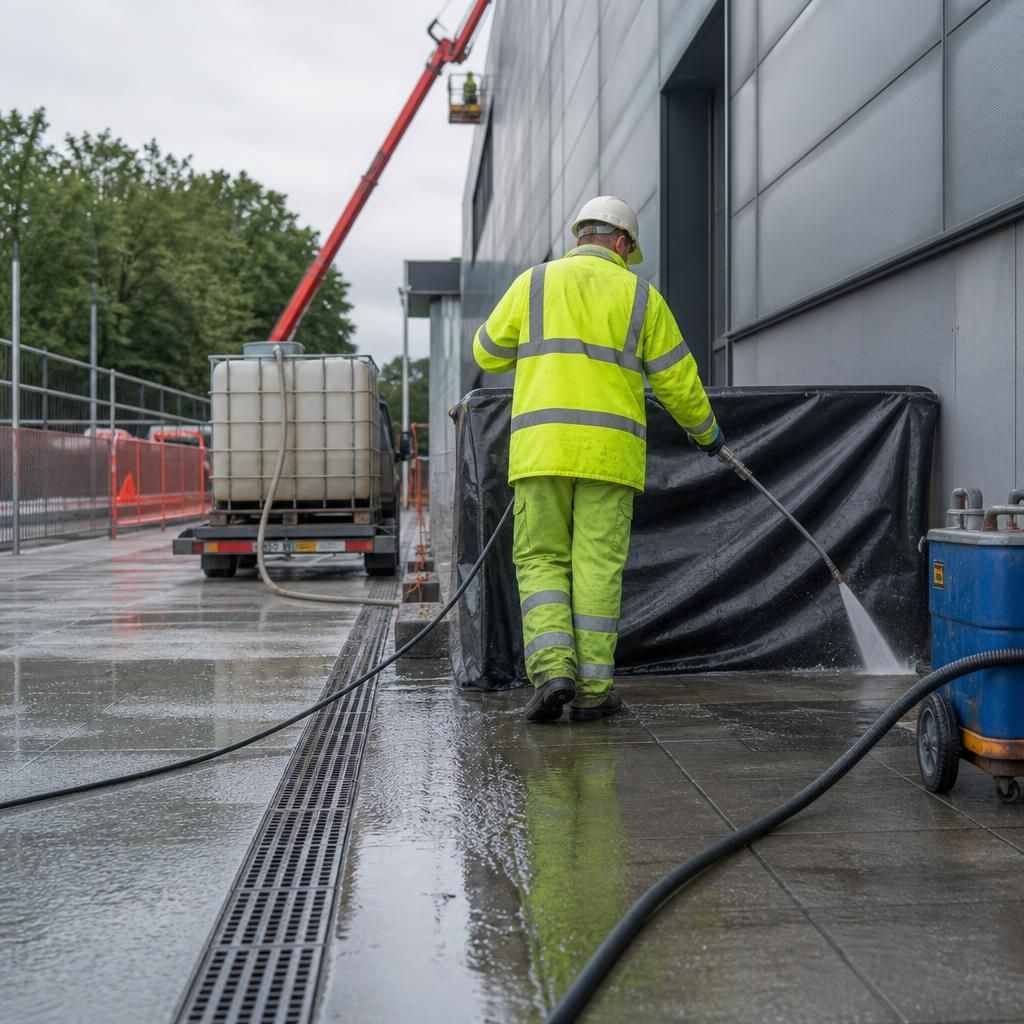
Effective wastewater control is a key environmental consideration when choosing façade and cladding jet washing services. Dirty water can contain oils, paint particles, metals, detergents and biological growth, so it must not be allowed to enter surface-water drains, soil or nearby watercourses without suitable controls.
Before work starts, the contractor should identify drainage routes and explain whether runoff will be contained, filtered, collected or removed from site. Measures such as drain covers, bunding, wet vacuums and collection tanks may be required, depending on the surface contamination and site layout. Ask for this approach to be included in the method statement, alongside details of any trade effluent requirements and the proposed disposal route.
Request an environmental cleaning plan for your façade and cladding
Request an environmental cleaning plan for your façade and cladding, covering water use, runoff control, chemical selection, access arrangements and waste disposal. We can assess the site and provide a method statement suited to your building and surrounding environment.