
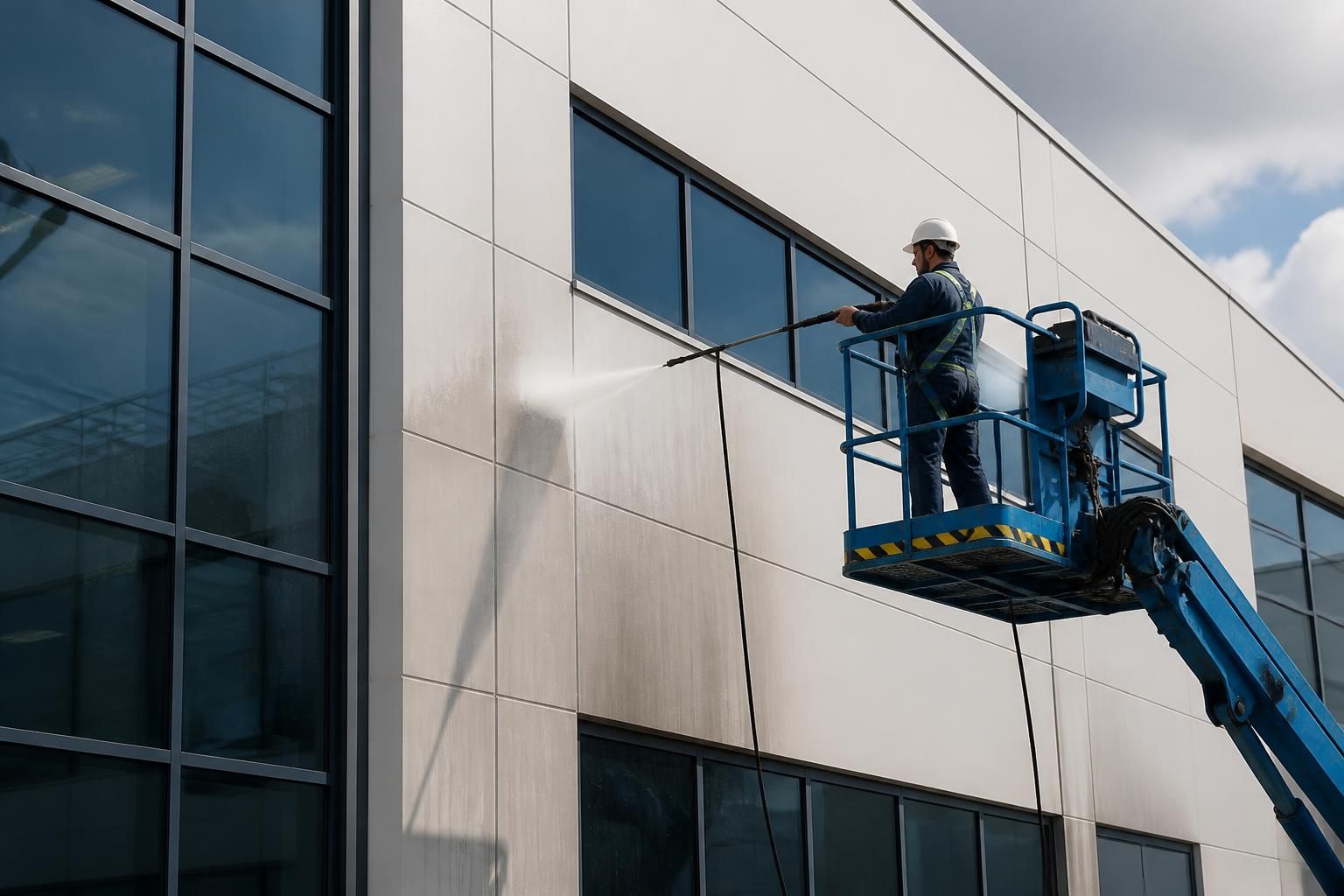
How often should façade and cladding jet washing be performed?
Façade and cladding jet washing is typically scheduled as part of an annual or biennial maintenance plan, but the right frequency depends on the material, exposure, pollution levels and type of soiling. Buildings near busy roads, industrial areas or coastal environments may need more frequent cleaning, while a site inspection can confirm the safest interval.
Façade and cladding jet washing is commonly planned annually or every two years, but there is no universal interval that suits every building. The appropriate frequency depends on the cladding material, the building’s exposure to pollution and weather, the type of deposits present, surrounding site conditions and the cleaning method that can be used safely.
A regular maintenance schedule is preferable to waiting until dirt, algae, traffic film or atmospheric deposits become heavily established. Routine cleaning helps preserve the appearance of the building, makes defects easier to identify and can reduce the need for more aggressive treatment later. However, the cleaning interval should always be based on a site assessment rather than applying the same programme to every façade.
Annual or biennial cleaning is often suitable for commercial buildings in relatively clean environments with limited organic growth and moderate traffic exposure. A more frequent programme may be appropriate where the building must maintain a consistently professional appearance, receives high footfall or forms part of a managed property portfolio.
Buildings close to busy roads, industrial premises, construction activity, railway lines or urban centres can accumulate soot, dust, oil-related traffic film and airborne pollutants more quickly. These sites may require façade and cladding cleaning at shorter intervals, particularly on elevations facing roads or areas where dust is generated. Coastal locations can also need closer monitoring because salt deposits and wind-driven contaminants may affect external surfaces.
Vegetation, shade and persistent dampness are other important factors. North-facing elevations, covered walkways, service yards and areas below leaking gutters may remain damp for longer, encouraging algae, moss or other organic growth. In these locations, cleaning may need to be coordinated with gutter maintenance, drainage repairs, roof inspections or vegetation management. Jet washing alone will not prevent recurring soiling if the source of the moisture or contamination remains.
The façade material determines both the suitable cleaning frequency and the method used. Powder-coated or painted metal cladding, coated panels, brickwork, concrete, render, glass and stone all respond differently to pressure, heat, detergents and agitation. Some finishes can be damaged by excessive pressure, incorrect nozzle selection or repeated harsh cleaning. A competent contractor should identify the surface, inspect its condition and carry out controlled testing before recommending a recurring programme.
Particular care is needed where coatings are weathered, joints are deteriorating, panels are loose, sealants have failed or corrosion is present. Cleaning can expose these conditions, but it should not be used to conceal or compensate for them. Any significant defects should be recorded and referred for repair so that water ingress and further deterioration are not allowed to continue.
Visual inspections between cleans provide a practical way to confirm whether the planned interval remains appropriate. Look for:
- Dark streaking beneath roof edges, window frames, vents or drainage outlets;
- Traffic film, soot or dust deposits on lower elevations and entrances;
- Algae, moss or lichen on shaded or persistently damp areas;
- Graffiti, staining or spillages that may become harder to remove over time;
- Faded, chalking, flaking or blistered coatings;
- Blocked or leaking gutters and downpipes contributing to dirty façades; and
- Loose panels, damaged joints, cracked render or failed sealant that require attention before washing.
Some contamination should be dealt with promptly rather than left until the next planned clean. Graffiti, bird fouling, chemical residues, food or drink spillages and construction-related deposits can bond to a surface or cause staining if they remain in place. Prompt removal may require a different technique from routine jet washing, including low-pressure washing, steam cleaning, a compatible detergent or controlled abrasive treatment where appropriate.
For larger premises, a planned cleaning schedule can divide the building into elevations or zones. High-risk and high-visibility areas, such as entrances, loading bays and road-facing façades, may be inspected and cleaned more often than sheltered elevations. This approach can maintain presentation standards while avoiding unnecessary cleaning of areas that remain in good condition.
Cleaning should also be timed around the building’s use and other maintenance work. Consider access requirements, pedestrian and vehicle management, tenant activity, deliveries, refurbishment, roof work and weather conditions. Washing during unsuitable weather or when temperatures are too low can affect drying and treatment performance. The contractor should also plan how wastewater, detergents and dislodged contaminants will be contained and disposed of in accordance with site and environmental requirements.
After each service, retain a record of the areas cleaned, methods used, access arrangements, observed defects and any recommendations. Before-and-after photographs can help property managers compare changes over time and identify elevations that are becoming contaminated more quickly. These records support more accurate future planning and help demonstrate that external maintenance is being managed systematically.
For most commercial and industrial properties, the best approach is to combine a planned annual or biennial clean with interim inspections and responsive treatment of localised contamination. A site exposed to heavy pollution, dampness, industrial dust or high presentation requirements may need a shorter interval, while a sheltered building with stable, well-maintained surfaces may be suitable for less frequent full cleaning. The interval should be reviewed after each inspection and adjusted when the building’s use, surrounding environment, surface condition or maintenance requirements change.
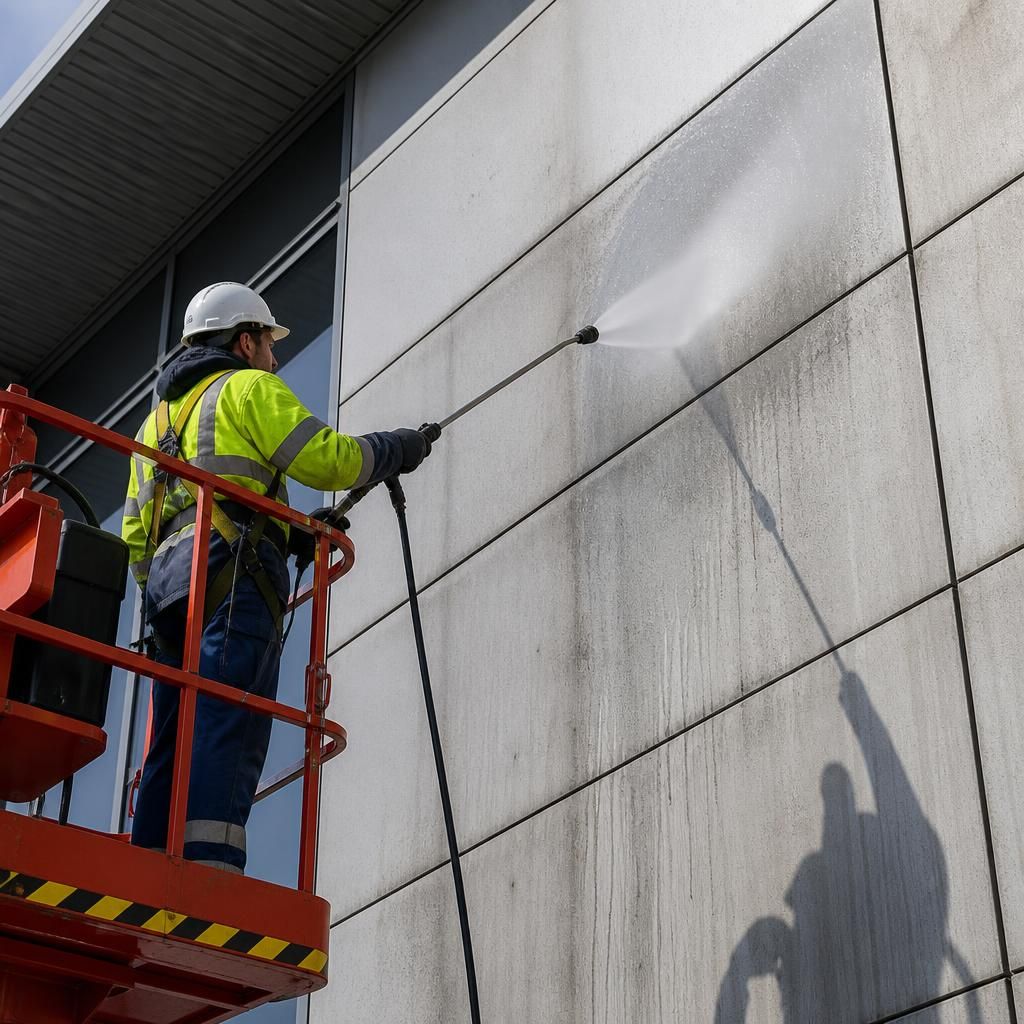
Façade and cladding jet washing should be reviewed after each clean rather than treated as a fixed, permanent interval. The condition of the surface, the type of contamination and the building’s exposure will show whether annual, biennial or more frequent cleaning remains appropriate.
Interim inspections should check road-facing elevations, entrances, loading areas, shaded sections and surfaces below leaking gutters or drainage outlets. Traffic film, algae, staining and recurring dampness may indicate that these areas need localised attention before the next full clean. If soiling returns quickly, the underlying cause should also be addressed; jet washing alone will not resolve defective drainage, excessive moisture or nearby dust generation.
Keep records of the areas cleaned, methods used, defects found and recommended follow-up actions. This gives property managers a clear basis for adjusting the maintenance schedule when site conditions, occupancy, surrounding activity or façade condition changes.