
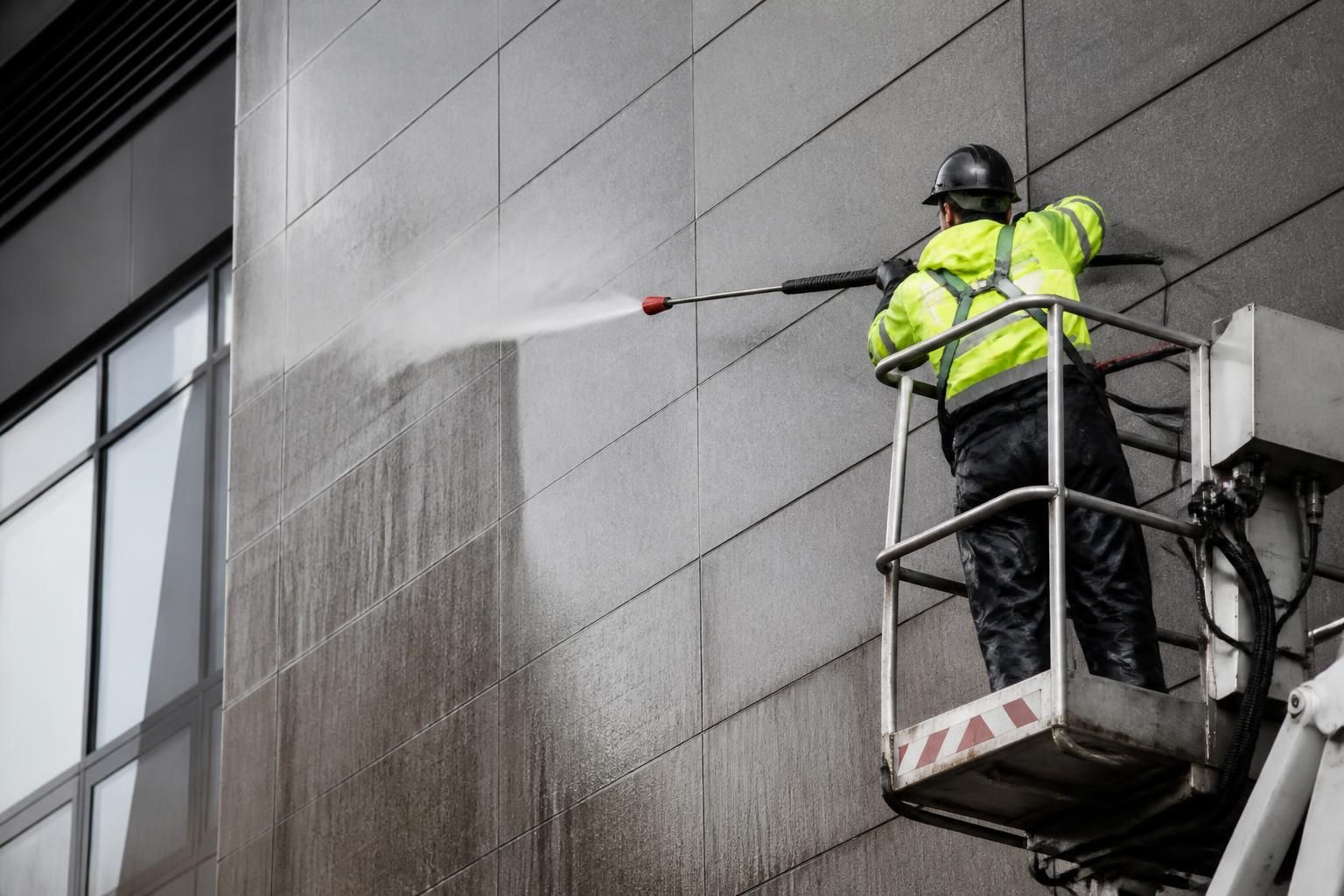
How does façade and cladding jet washing impact building maintenance costs in the long term?
Professional façade and cladding jet washing can reduce long-term building maintenance costs by removing dirt, algae, pollutants and other contaminants before they cause surface deterioration. Regular, material-appropriate cleaning helps protect finishes, identify defects early and limit the need for more extensive repairs, recoating or replacement.
Façade and cladding jet washing can reduce long-term building maintenance costs when it is planned around the materials, contamination and condition of the building. Removing dirt, algae, traffic film, bird deposits, industrial pollutants and other contaminants helps limit surface deterioration, protects existing finishes and makes defects easier to identify before they develop into more extensive repairs.
The financial benefit is not simply the cost of making the building look cleaner. Effective cleaning forms part of a planned maintenance programme. It can help extend the serviceable life of coatings and cladding finishes, reduce the frequency of remedial work and support a more accurate maintenance budget for the property.
How contamination increases maintenance costs
External contaminants can affect a façade in several ways. Organic growth such as algae, moss and lichen can retain moisture against surfaces and joints. Atmospheric pollution and traffic film may contain acidic or abrasive particles that contribute to staining and gradual finish degradation. Bird fouling can be corrosive if it remains on painted or coated surfaces, while accumulated dirt can obscure cracks, failed sealant, corrosion and water ingress.
If these contaminants are left in place, cleaning may eventually need to be combined with repairs, surface preparation, repainting or replacement of damaged components. A suitable jet washing programme helps separate routine cleaning from more expensive corrective maintenance.
Protecting coatings and finishes
Many commercial façades and cladding systems rely on paint, powder coating, render, sealants or protective treatments. These finishes provide a barrier between the substrate and the external environment. Contamination, moisture and biological growth can weaken that barrier over time, particularly where the finish is already worn or damaged.
Material-appropriate cleaning removes harmful deposits without unnecessarily stripping or roughening the finish. The pressure, water temperature, nozzle selection, distance and cleaning solution must be controlled for the specific surface. Excessive pressure can damage coatings, force water into joints or expose the substrate, creating costs that a properly assessed cleaning method should avoid.
Reducing the need for repairs and replacement
Regular façade and cladding cleaning does not prevent every defect, but it can reduce the likelihood that minor problems remain hidden or worsen unnoticed. A clean surface makes it easier to inspect panels, fixings, sealant lines, render, brickwork, roof edges and drainage details. Early identification of failed joints, loose components, corrosion or cracked finishes may allow targeted repairs instead of larger sections being refurbished.
Replacement is usually more disruptive and expensive than routine cleaning because it can involve specialist materials, access equipment, traffic management, waste disposal and downtime for the building. Cleaning cannot reverse advanced corrosion, structural movement or failed materials, so it should be treated as one part of a wider inspection and maintenance plan rather than a substitute for necessary repairs.
Improving maintenance planning
Planned cleaning gives property managers a clearer view of how the façade is performing. Before work starts, the surface can be assessed for its material, finish, contamination and existing defects. During or after the clean, areas requiring repair can be recorded and prioritised. This makes it easier to coordinate cleaning with sealant replacement, repainting, roof work, window maintenance or other planned access requirements.
Combining compatible tasks can reduce repeated mobilisation and access costs. For example, where safe and practical, façade cleaning and inspection may be scheduled alongside other external maintenance. Any such approach should be based on the access method, the condition of the building and the requirements of each contractor rather than on combining unsuitable operations.
Maintaining a professional external appearance
For offices, retail premises, industrial units, managed estates and public buildings, the condition of the exterior can affect how the property is perceived by occupants, visitors, tenants and clients. A consistent cleaning schedule helps prevent heavy staining and patchy deterioration, which may otherwise lead to urgent reactive work before inspections, lettings, audits or important visits.
Appearance alone should not determine the cleaning interval. The appropriate frequency depends on the building material, exposure to traffic or industrial emissions, nearby vegetation, moisture levels, bird activity, the type of contamination and the consequences of allowing deposits to accumulate. Over-cleaning can also create unnecessary cost or wear, so the programme should be proportionate to the property.
Accounting for the initial cost
The long-term value of jet washing depends on the method and scope of the work. A quotation may reflect the façade area, access requirements, contamination level, surface type, water and waste arrangements, traffic management, protection of nearby areas and any specialist cleaning treatment. More difficult access or delicate materials can increase the initial cost, but an appropriately controlled method may be less expensive overall than repairing damage caused by unsuitable equipment or chemicals.
The lowest initial price is not necessarily the lowest lifecycle cost. A reliable assessment should explain the proposed cleaning system, test-cleaning process where appropriate, controls for water run-off, protection of adjacent surfaces and how defects will be reported. It should also distinguish cleaning from repairs so that the condition of the façade and the expected scope of work are clear.
Using jet washing without creating avoidable damage
Cost savings depend on competent application. Before cleaning, the surface should be assessed for existing cracks, failed coatings, open joints, fragile panels, corrosion and water-sensitive areas. Test patches can help confirm whether the selected pressure, temperature and detergent are suitable. Operators should also consider windows, vents, electrical equipment, entrances, landscaping and occupied areas.
Where high-pressure water would be unsuitable, a lower-pressure system, soft washing, steam cleaning or another controlled technique may be more appropriate. Petrol-powered equipment can provide useful output on large sites, but the equipment choice should be matched to the surface and working environment. The objective is controlled removal of contamination, not the highest possible pressure.
Supporting a practical lifecycle maintenance plan
After cleaning, the façade should be monitored for recurring contamination, coating failure, water staining and other changes. Follow-up cleaning recommendations should reflect the building’s actual exposure rather than relying on a fixed schedule. Keeping records of the cleaning date, areas treated, methods used, defects observed and recommended follow-up work provides a useful baseline for future inspections and quotations.
A sensible lifecycle approach is to:
- inspect the façade and cladding before cleaning;
- identify the materials, finishes and vulnerable details;
- remove contamination using a controlled, suitable method;
- record defects that require separate repair or investigation;
- monitor areas that soil or develop organic growth quickly; and
- schedule future cleaning before contamination becomes difficult or damaging to remove.
In practical terms, façade and cladding jet washing is most likely to reduce long-term costs when it is carried out as preventative maintenance, not as an occasional response to severe staining. The strongest cost control comes from combining material-specific cleaning with inspections, accurate records and timely repairs. This protects the building’s existing finishes, reduces avoidable deterioration and helps prevent routine maintenance from becoming a larger capital project.
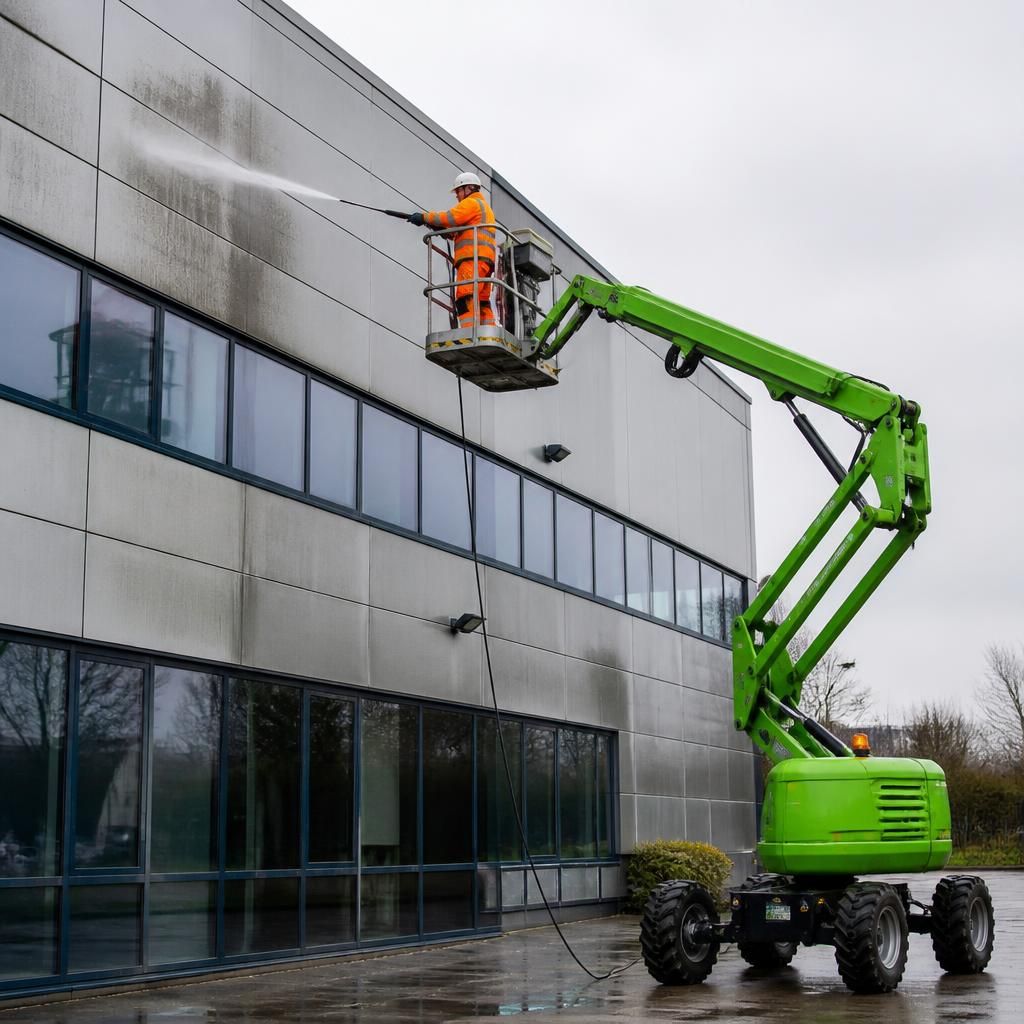
Façade and cladding jet washing can lower long-term maintenance costs by removing contaminants before they contribute to coating failure, corrosion, staining or moisture-related deterioration. When the cleaning method is matched to the material, it also allows defects such as failed sealant, cracked finishes and loose fixings to be identified while they are still suitable for targeted repair.
This makes cleaning more than an appearance-led service. Recording the areas cleaned, the condition of the surface and any recommended follow-up work gives property managers a reliable maintenance history. Future cleaning, inspections and repairs can then be planned together, helping to reduce reactive call-outs, repeated access costs and the risk of larger remedial work.
Plan Your Façade Cleaning and Maintenance
Arrange a façade and cladding assessment with Encanto Exterior Cleaning to identify priority cleaning, access requirements and any defects needing attention. We can then recommend a practical maintenance plan suited to your building’s materials and condition.