
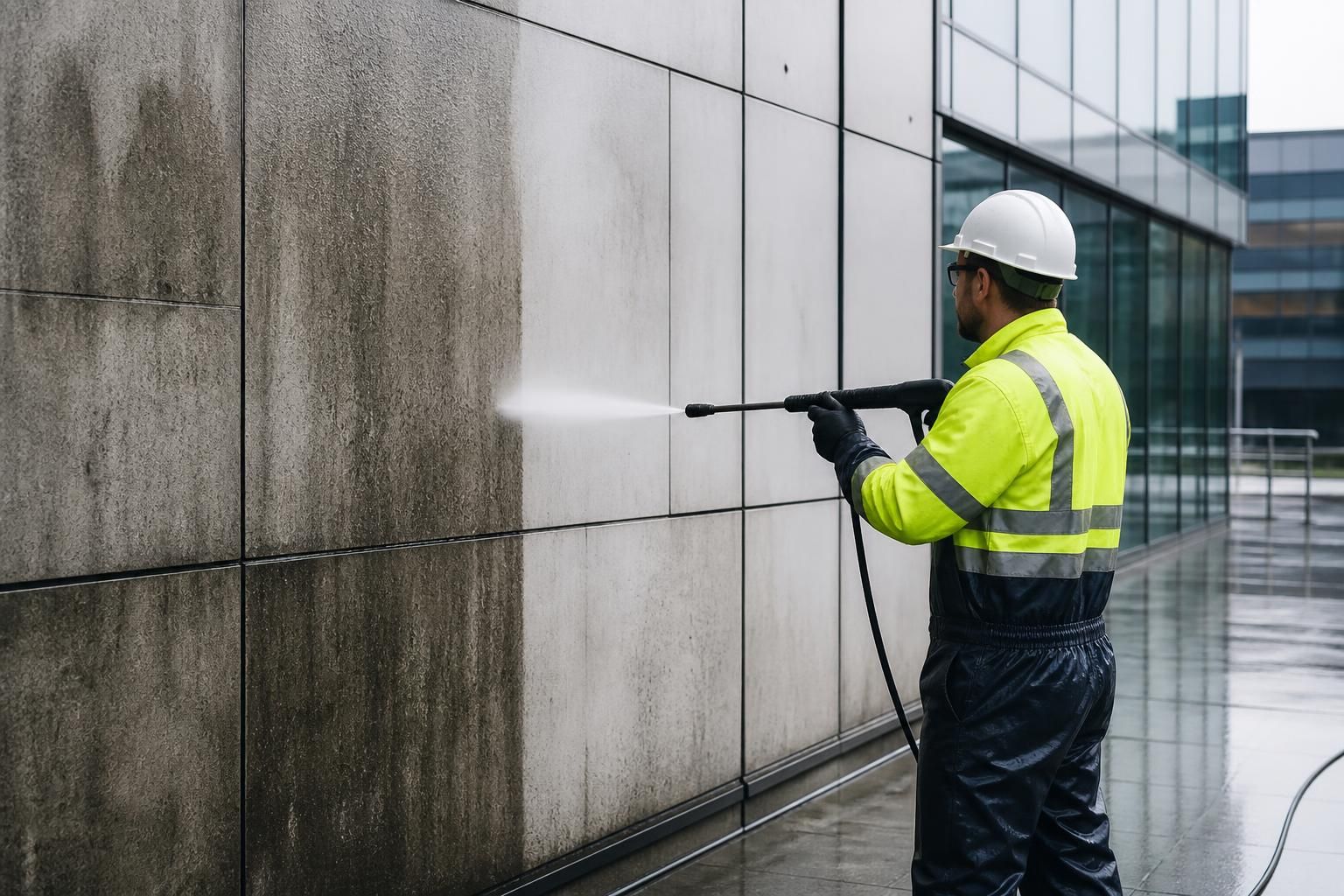
How do I determine the right type of pressure washer for my building's façade and cladding materials?
Choose a pressure washer based on the façade or cladding material, its condition, the type of soiling and the required cleaning method, using the lowest effective pressure rather than maximum power. A professional assessment should also consider water flow, temperature, nozzle selection, access requirements and runoff controls, with a small test area completed before full cleaning.
The right pressure washer for a façade or cladding project is determined by the material, its condition, the type of soiling and the cleaning method required—not by the machine with the highest pressure. The objective is to remove contamination at the lowest effective pressure and water flow, while avoiding damage to coatings, joints, sealants, insulation systems and vulnerable surface finishes. A professional assessment should therefore take place before equipment is selected or cleaning begins.
Different façade materials tolerate different levels of mechanical and thermal cleaning. Brick, concrete and some robust masonry may withstand more intensive jet washing than painted render, powder-coated cladding or older surfaces. Materials that appear sound can still have weakened mortar, hairline cracks, flaking coatings or failed sealant around windows and panels. The machine, nozzle and operating pressure must account for these defects rather than being chosen solely according to the apparent strength of the main surface.
- Metal cladding: coated steel, aluminium and composite panels generally require controlled pressure, suitable detergents and wide-angle spray patterns. Excessive pressure can mark the coating, force water behind laps or damage protective finishes.
- Glass-reinforced plastic and composite materials: these should be cleaned carefully because aggressive pressure or unsuitable chemicals can affect the surface, joints and protective layers.
- Render and insulated render systems: the cleaning approach must protect the render finish and prevent water being driven into cracks, edges and insulation interfaces. Low-pressure washing, soft washing or steam cleaning may be more appropriate than conventional jet washing.
- Brick and masonry: the condition of the brick faces, mortar and previous repairs is important. Hard jetting can erode softer masonry, open joints and spread staining if the wrong nozzle or technique is used.
- Concrete: sound concrete may accept a stronger cleaning method, but exposed aggregate, deteriorated areas, painted sections and repaired surfaces require separate treatment.
- Painted, powder-coated or lacquered finishes: these need a conservative test clean because pressure, heat and chemicals can cause dulling, lifting, streaking or colour variation.
The condition of the façade is as important as its material. A new, well-maintained panel may tolerate a different approach from an older façade with chalking paint, corrosion, open joints or previous water ingress. Areas around doors, windows, vents, signage, electrical fittings and façade penetrations should be inspected separately. Any loose material, cracked sealant or failed coating should be recorded before cleaning so that the method does not conceal a maintenance issue or make it worse.
The type of soiling also influences the choice of machine. Dust, traffic film and loose dirt may be removed with controlled cold-water washing and an appropriate detergent. Grease, oily deposits and some industrial residues can respond better to heated water, provided the temperature is suitable for the cladding finish and sealants. Organic growth may require a compatible biocidal treatment and dwell time rather than greater pressure. Algae, moss and lichen should not simply be blasted from the surface if roots or staining remain embedded in porous material.
Cold-water pressure washers are often suitable for general façade washing where the contamination is light and the surface is robust. Hot-water equipment can improve the removal of greasy or heavily bonded deposits, but heat must be controlled around coatings, sealants, plastics, membranes and painted surfaces. Steam cleaning uses much lower water volumes and can be useful where delicate surfaces, restricted runoff or sensitive areas require a gentler process. It is not automatically suitable for every façade, since heat and moisture can still affect vulnerable finishes.
Pressure is only one part of the equipment specification. Water flow, spray angle, nozzle distance, temperature, detergent choice and the operator’s technique all affect the result. A wide fan nozzle generally distributes force more safely than a narrow, concentrated jet. Rotary or specialised attachments may improve productivity on suitable hard surfaces, but they can create uneven marks or damage coatings if used on inappropriate cladding. Turbo nozzles and abrasive accessories should not be treated as general-purpose options for façade work.
Cleaning should begin with a small test area in an inconspicuous location or on a representative section of the façade. The test should assess the selected pressure, nozzle, distance, temperature and cleaning solution together. After the surface has dried, it should be checked for colour change, coating disturbance, etching, water tracking, joint damage and any difference between cleaned and uncleaned areas. The method can then be adjusted before the main elevation is treated.
A suitable machine also depends on access and site conditions. Where the façade is reached from a mobile elevated work platform, scaffold or rope-access system, the equipment must be compatible with the available water supply, hose routing, electrical provision and working area. Petrol-powered equipment may provide useful independence from site electricity on larger external projects, while electric machines can be appropriate where power is available and emissions or noise need to be limited. Equipment should never be selected without considering hose management, operator control and the risk of spray reaching people, vehicles or nearby property.
Runoff control must be included in the equipment decision. Pressure washing can mobilise dirt, detergents, paint particles, oils and other contaminants. The cleaning plan should identify where water will collect, whether drains can legally receive the runoff and how contaminated water will be contained, filtered, collected or disposed of. Lower-water methods may reduce the volume requiring management, but they do not remove the need to assess the contents of the runoff.
In practice, the selection process should follow these steps:
- Identify the façade and cladding materials, coatings, joints and vulnerable details.
- Inspect the condition of the surface, including cracks, corrosion, loose finishes, failed sealants and previous repairs.
- Establish whether the contamination is loose dirt, traffic film, organic growth, grease, staining, paint or another residue.
- Choose the least aggressive suitable method, which may be controlled pressure washing, hot-water cleaning, soft washing or steam cleaning.
- Select the nozzle, spray pattern, temperature, detergent and operating pressure for the specific surface rather than using one setting throughout the site.
- Complete and evaluate a test area before approving the full cleaning method.
- Confirm access arrangements, water and power requirements, protection of adjacent areas, and runoff controls.
- Monitor the work as it progresses and reduce the intensity wherever the surface responds adequately at a gentler setting.
There is rarely one pressure-washer setting that is suitable for an entire building. A façade may contain several materials and finishes, so different elevations or details may need separate methods. A competent cleaning contractor should be able to explain why a particular machine and attachment have been selected, identify surfaces that should not be jet washed, and provide a clear method statement covering testing, access, chemical use, protection and wastewater management. This approach provides effective cleaning while preserving the façade and cladding for future maintenance.
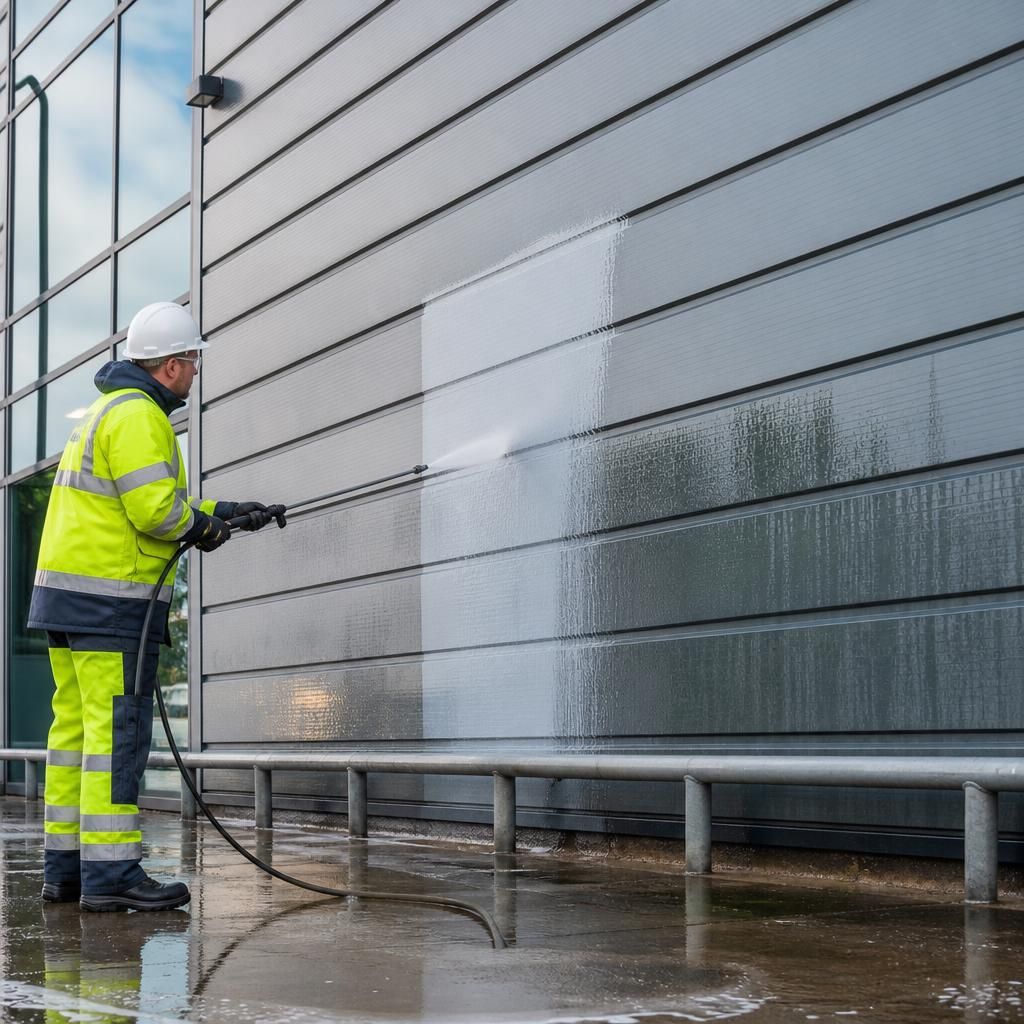
A test clean is the safest way to confirm whether the selected pressure washer and settings are suitable for a façade or cladding material. It should be carried out on an inconspicuous but representative area, using the proposed nozzle, spray distance, temperature, detergent and operating pressure.
The surface should be inspected again after it has dried. Check for coating disturbance, colour change, etching, streaking, damaged sealant or water entering joints. If the area cleans effectively at a gentler setting, that setting should be used for the wider elevation. Different materials or finishes on the same building may require separate test areas and cleaning methods.